VictorNwobodo/INCIDENT-RESPONSE-REPORT-AUTOMATED-AUTHENTICATION-ATTACK-TRACE
GitHub: VictorNwobodo/INCIDENT-RESPONSE-REPORT-AUTOMATED-AUTHENTICATION-ATTACK-TRACE
一份基于 Splunk 平台的自动化身份验证攻击事件响应报告,完整记录了从日志发现、痕迹取证到影响评估的调查全过程。
Stars: 0 | Forks: 0
# 事件响应报告:自动化身份验证攻击追踪
**报告日期:**2026年5月29日
**调查员姓名:**Nwobodo Chukwuemeka Victor
**事件状态:**已关闭 / 已缓解
**平台:**Splunk
### 1. 执行摘要
2026年5月3日,一次自动化身份验证攻击针对了工作站 `VICTORAN` 上的本地账户系统 `user`。Splunk 分析确认,在 33 秒的时间内共发生了 20 次有节奏的失败登录尝试。与系统成功指标的交叉关联确认,未发生任何未经授权的入侵或数据泄露。攻击已被成功控制,且主机的基础架构保持安全。
### 2. 行动项与控制建议
为确保该主机系统免受未来更激烈的密码攻击,建议采取以下策略改进:
1. **禁用通用账户:**重命名或完全禁用默认账户用户名 `user`,以消除可预测的攻击媒介。
2. **账户锁定策略:**实施一项组策略规则,如果某账户在 2 分钟内触发 5 次失败尝试,则冻结该账户 30 分钟。这可以完全阻止自动化工具的运行。
 ## 阶段 1:初步发现与日志分布
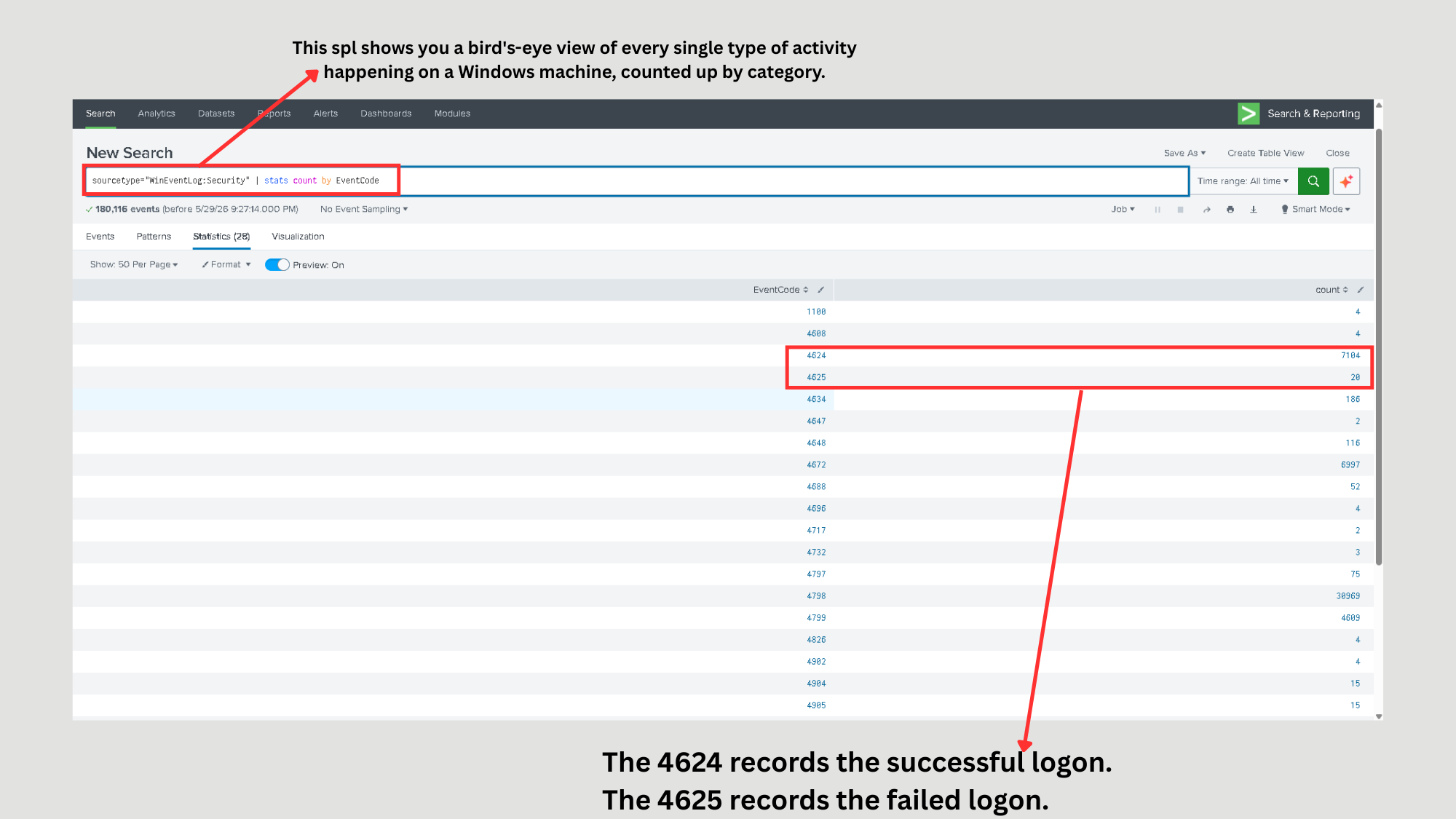
对 Windows 安全事件数据(`WinEventLog:Security`)进行了初步审查,以建立身份验证活动的基准。
### 调查结果:
* 成功登录总数(EventCode 4624):7,104
* 失败登录总数(EventCode 4625):20
存在 20 次失败登录尝试,需要进行有针对性的调查,以隔离源 IP 地址、目标用户账户,并确定是否有未经授权的用户正在尝试恶意的密码猜测。
## 阶段 1:初步发现与日志分布
对 Windows 安全事件数据(`WinEventLog:Security`)进行了初步审查,以建立身份验证活动的基准。
### 调查结果:
* 成功登录总数(EventCode 4624):7,104
* 失败登录总数(EventCode 4625):20
存在 20 次失败登录尝试,需要进行有针对性的调查,以隔离源 IP 地址、目标用户账户,并确定是否有未经授权的用户正在尝试恶意的密码猜测。
 ## 阶段 2:技术深入分析与痕迹取证
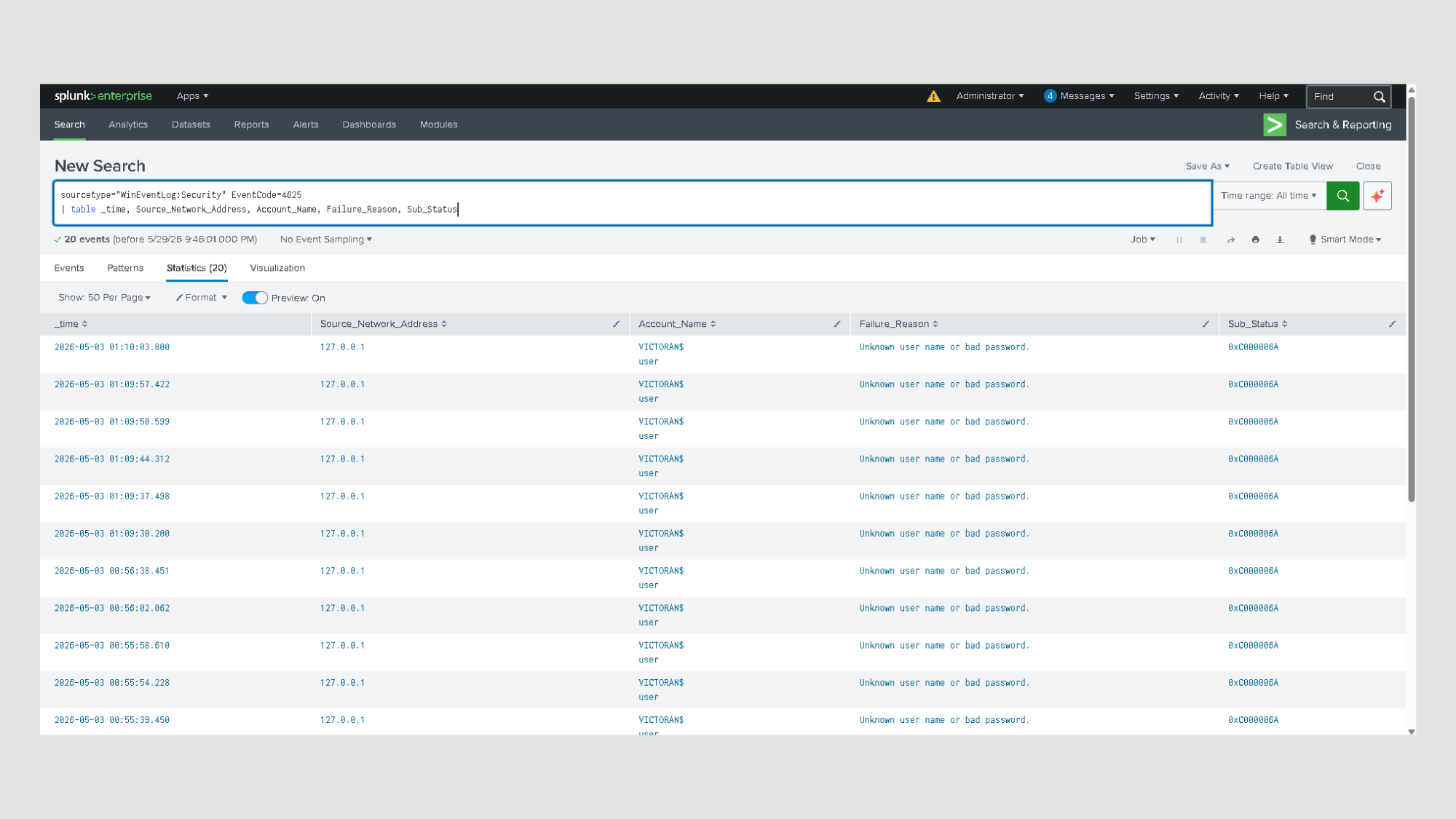
对 EventCode 4625 日志的详细提取显示,针对该主机工作站(`VICTORAN`)出现了极具节奏感的、自动化的身份验证失败模式。
### 核心入侵指标:
* **目标账户:**`user`
* **源网络地址:**`127.0.0.1`(本地环回)
* **失败状态码:**`0xC000006A`(用户名有效,但提供的密码不正确)
* **攻击画像:**自动化暴力破解 / 密码猜测
### 日志证据时间线分析:
身份验证尝试显示出严格的机械延迟,每次提交之间正好间隔 6–7 秒:
* 2026-05-03 01:09:30.200 - 失败 (0xC000006A)
* 2026-05-03 01:09:37.498 - 失败 (0xC000006A) [+7.2 秒]
* 2026-05-03 01:09:44.312 - 失败 (0xC000006A) [+6.8 秒]
* 2026-05-03 01:09:50.599 - 失败 (0xC000006A) [+6.2 秒]
* 2026-05-03 01:09:57.422 - 失败 (0xC000006A) [+6.8 秒]
* 2026-05-03 01:10:03.800 - 失败 (0xC000006A) [+6.3 秒]
**分析师评估:** 均匀的时间间隔证实了存在执行密码猜测机制的自动化脚本。由于源地址是 `127.0.0.1`,这表明执行源自直接在系统上运行的本地进程,或者是通过本地代理隧道路由,而不是来自暴露的外部网络边界。
## 阶段 2:技术深入分析与痕迹取证
对 EventCode 4625 日志的详细提取显示,针对该主机工作站(`VICTORAN`)出现了极具节奏感的、自动化的身份验证失败模式。
### 核心入侵指标:
* **目标账户:**`user`
* **源网络地址:**`127.0.0.1`(本地环回)
* **失败状态码:**`0xC000006A`(用户名有效,但提供的密码不正确)
* **攻击画像:**自动化暴力破解 / 密码猜测
### 日志证据时间线分析:
身份验证尝试显示出严格的机械延迟,每次提交之间正好间隔 6–7 秒:
* 2026-05-03 01:09:30.200 - 失败 (0xC000006A)
* 2026-05-03 01:09:37.498 - 失败 (0xC000006A) [+7.2 秒]
* 2026-05-03 01:09:44.312 - 失败 (0xC000006A) [+6.8 秒]
* 2026-05-03 01:09:50.599 - 失败 (0xC000006A) [+6.2 秒]
* 2026-05-03 01:09:57.422 - 失败 (0xC000006A) [+6.8 秒]
* 2026-05-03 01:10:03.800 - 失败 (0xC000006A) [+6.3 秒]
**分析师评估:** 均匀的时间间隔证实了存在执行密码猜测机制的自动化脚本。由于源地址是 `127.0.0.1`,这表明执行源自直接在系统上运行的本地进程,或者是通过本地代理隧道路由,而不是来自暴露的外部网络边界。
 ## 阶段 3:影响评估与验证
### 验证结果:
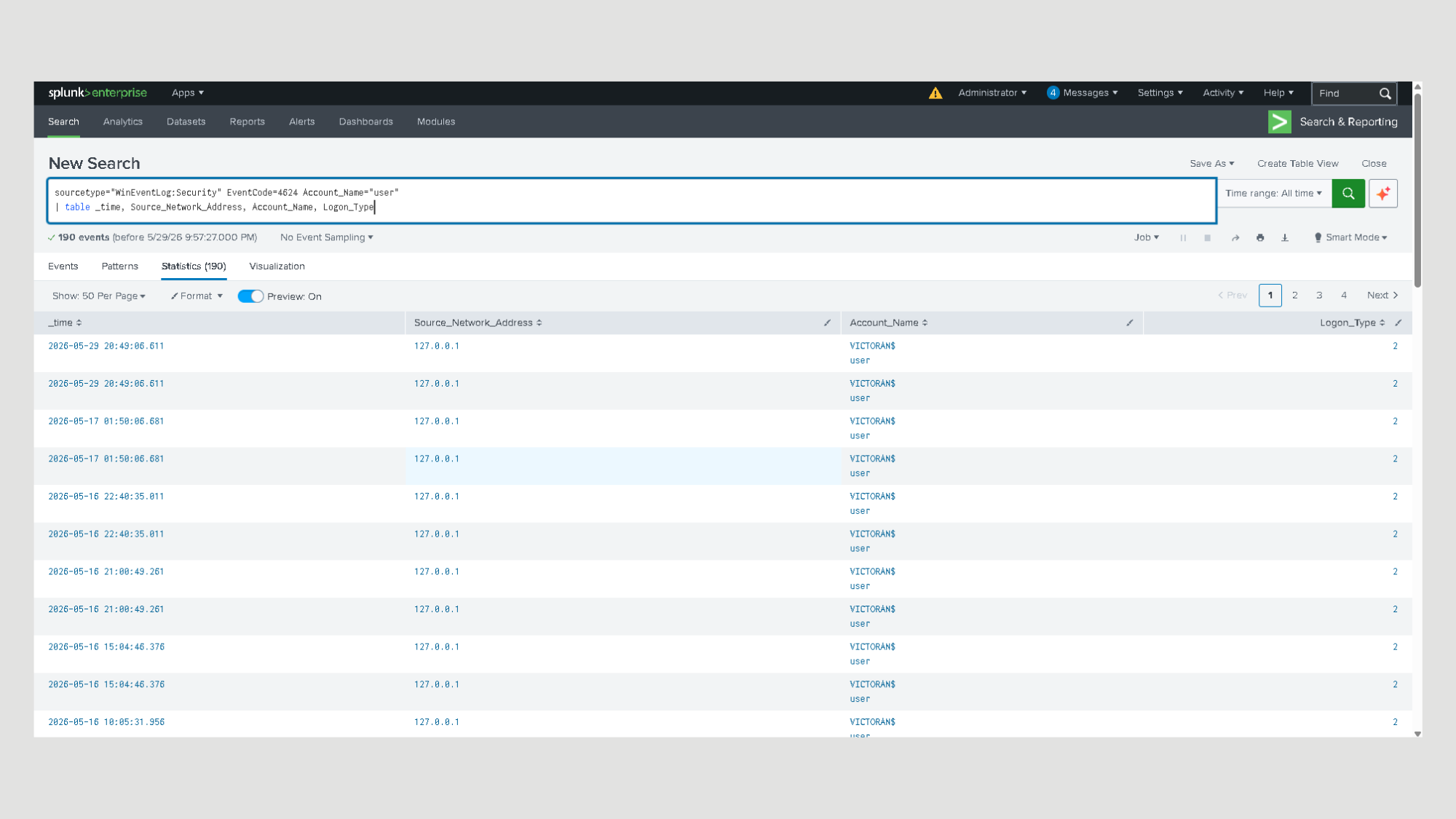
* **关联到的成功总数:**在历史日志中发现了 190 个事件。
* **观察到的登录类型:**类型 2(交互式本地登录)。
* **时间关联性:**在 2026-05-03 01:09:30 至 01:10:03 的攻击窗口期间或之后紧接着的时间内,没有发生任何成功的登录事件。
### 最终影响评估:
**未发生入侵(误报 / 已缓解)**
虽然攻击画像符合恶意的自动化脚本模式,但缺乏在时间顺序上相关的成功身份验证,证明威胁行为者未能猜测出有效的凭证集。系统基线安全性保持完好。
## 阶段 3:影响评估与验证
### 验证结果:
* **关联到的成功总数:**在历史日志中发现了 190 个事件。
* **观察到的登录类型:**类型 2(交互式本地登录)。
* **时间关联性:**在 2026-05-03 01:09:30 至 01:10:03 的攻击窗口期间或之后紧接着的时间内,没有发生任何成功的登录事件。
### 最终影响评估:
**未发生入侵(误报 / 已缓解)**
虽然攻击画像符合恶意的自动化脚本模式,但缺乏在时间顺序上相关的成功身份验证,证明威胁行为者未能猜测出有效的凭证集。系统基线安全性保持完好。
## 阶段 1:初步发现与日志分布
对 Windows 安全事件数据(`WinEventLog:Security`)进行了初步审查,以建立身份验证活动的基准。
### 调查结果:
* 成功登录总数(EventCode 4624):7,104
* 失败登录总数(EventCode 4625):20
存在 20 次失败登录尝试,需要进行有针对性的调查,以隔离源 IP 地址、目标用户账户,并确定是否有未经授权的用户正在尝试恶意的密码猜测。
## 阶段 2:技术深入分析与痕迹取证
对 EventCode 4625 日志的详细提取显示,针对该主机工作站(`VICTORAN`)出现了极具节奏感的、自动化的身份验证失败模式。
### 核心入侵指标:
* **目标账户:**`user`
* **源网络地址:**`127.0.0.1`(本地环回)
* **失败状态码:**`0xC000006A`(用户名有效,但提供的密码不正确)
* **攻击画像:**自动化暴力破解 / 密码猜测
### 日志证据时间线分析:
身份验证尝试显示出严格的机械延迟,每次提交之间正好间隔 6–7 秒:
* 2026-05-03 01:09:30.200 - 失败 (0xC000006A)
* 2026-05-03 01:09:37.498 - 失败 (0xC000006A) [+7.2 秒]
* 2026-05-03 01:09:44.312 - 失败 (0xC000006A) [+6.8 秒]
* 2026-05-03 01:09:50.599 - 失败 (0xC000006A) [+6.2 秒]
* 2026-05-03 01:09:57.422 - 失败 (0xC000006A) [+6.8 秒]
* 2026-05-03 01:10:03.800 - 失败 (0xC000006A) [+6.3 秒]
**分析师评估:** 均匀的时间间隔证实了存在执行密码猜测机制的自动化脚本。由于源地址是 `127.0.0.1`,这表明执行源自直接在系统上运行的本地进程,或者是通过本地代理隧道路由,而不是来自暴露的外部网络边界。
## 阶段 3:影响评估与验证
### 验证结果:
* **关联到的成功总数:**在历史日志中发现了 190 个事件。
* **观察到的登录类型:**类型 2(交互式本地登录)。
* **时间关联性:**在 2026-05-03 01:09:30 至 01:10:03 的攻击窗口期间或之后紧接着的时间内,没有发生任何成功的登录事件。
### 最终影响评估:
**未发生入侵(误报 / 已缓解)**
虽然攻击画像符合恶意的自动化脚本模式,但缺乏在时间顺序上相关的成功身份验证,证明威胁行为者未能猜测出有效的凭证集。系统基线安全性保持完好。标签:子域枚举, 红队行动