stvsever/Cybersecurity_Fundamentals
GitHub: stvsever/Cybersecurity_Fundamentals
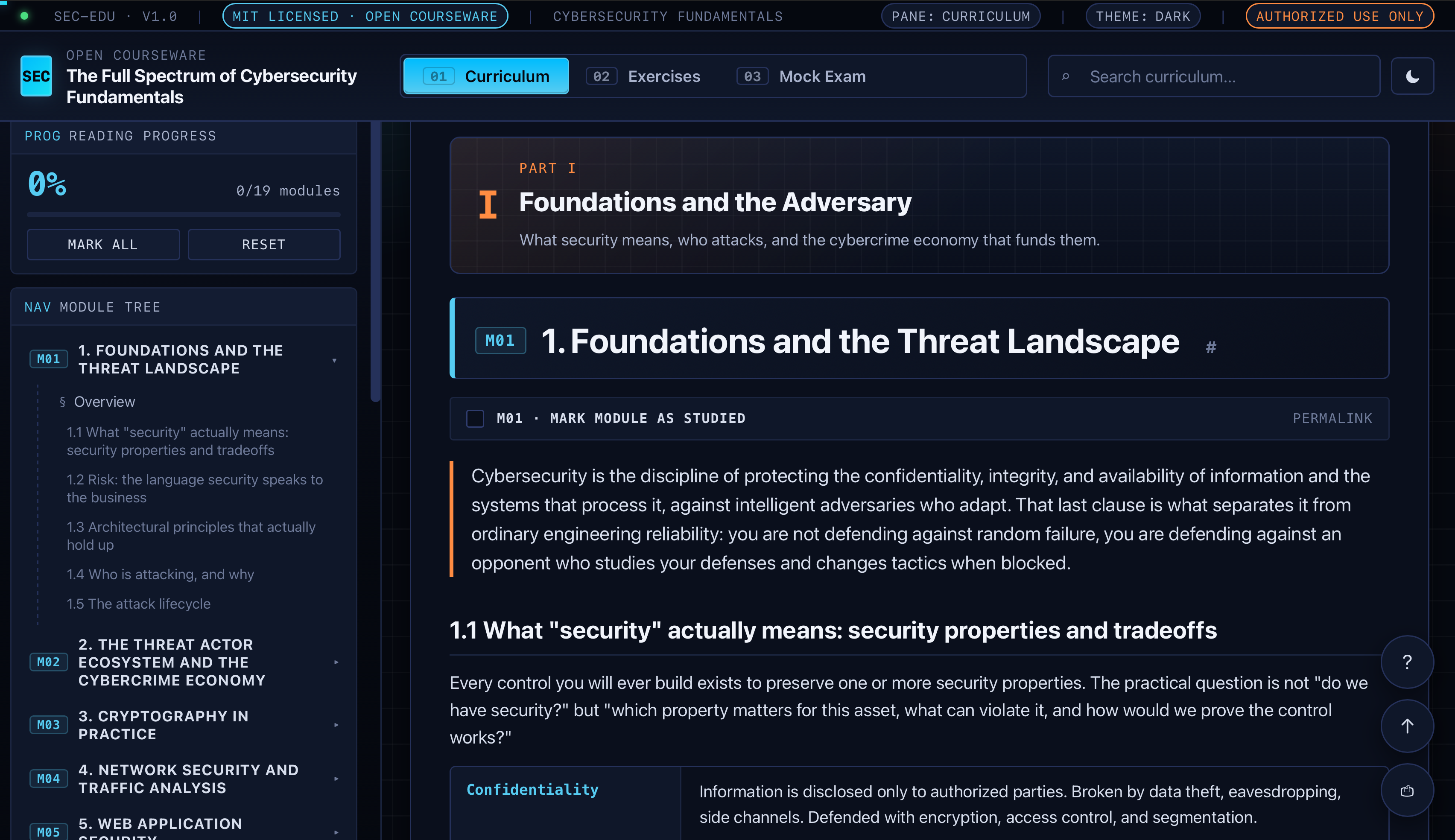
一门免费、基于浏览器的交互式网络安全基础课程,将课程阅读、编程练习与模拟考试整合在单个 HTML 文件中,帮助学习者系统掌握从密码学到攻防运营的完整安全知识体系。
Stars: 3 | Forks: 0
## 目录
- [快速开始](#quick-start)
- [包含内容](#what-is-included)
- [课程结构](#course-structure)
- [交互功能](#interactive-features)
- [练习与模拟考试](#exercises-and-mock-exam)
- [键盘快捷键](#keyboard-shortcuts)
- [项目结构](#project-structure)
- [合规使用](#responsible-use)
- [许可证](#license)
## 快速开始
### 1. 阅读课程
阅读课程无需构建任何内容。
```
open src/index.html # macOS
xdg-open src/index.html # Linux
start src/index.html # Windows
```
你也可以打开根目录下的 `index.html`,它会重定向到 `src/` 中的课程。
进度、练习草稿、主题和考试内容都会通过 `localStorage` 保存在你的浏览器本地。
### 2. 运行 Python 练习检查器
`02 Exercises` 面板中的 Python 练习使用本地运行器进行确定性检查。对于 Docker,Docker Desktop 或 Docker daemon 必须处于运行状态。
```
docker build -t cyber-course-runner docker
docker run --rm -p 8787:8787 cyber-course-runner
```
然后打开课程,进入 `02 Exercises`,点击 `Check runtime`,并运行代码检查。浏览器仅将代码发送到你机器上的 `http://127.0.0.1:8787/run`。不使用 LLM 进行评分。
如果不想使用 Docker 进行本地开发,你可以直接运行相同的运行器:
```
python3 docker/runner.py
```
## 包含内容
- 19 个课程模块,包含代码示例和课程中更新的真实案例。
- 真正的逐模块阅读模式,一次只隔离一个模块。
- 带有全匹配高亮和上一项/下一项导航的搜索功能。
- 专属的 `02 Exercises` 面板,具有分区和格式过滤器、200 多道练习题、多项选择题检查、开放性问答的标准答案,以及可运行的 Python 编程练习。
- 独立的 `03 Mock Exam` 面板,支持抽样测试和 1000 分制的评分。
- MITRE ATT&CK Enterprise、Mobile ATT&CK 和 ATLAS 教学矩阵。
- 映射到 ATT&CK 风格防御设计的 D3FEND 对抗措施知识图谱结构。
- 威胁情报互操作性:STIX 2.1、TAXII 2.1、MISP、OpenCTI、标记、置信度、过期和分发控制。
- 用于 FIMI、黑客攻击与泄露行动、Doppelganger 式媒体克隆、放大、响应和证据处理的 DISARM 红蓝影响力行动分析。
## 课程结构
| 部分 | 模块 | 重点 |
|---|---:|---|
| I. 基础与对手 | 01-02 | 安全属性、风险、威胁行为者、网络犯罪经济 |
| II. 技术核心与云 | 03-07 | 密码学、IAM、网络安全、流量分析、Web 应用安全、云、容器 |
| III. 进攻性操作 | 08-09 | MITRE ATT&CK、Mobile ATT&CK、D3FEND、侦察、漏洞利用、C2 |
| IV. 防御性操作与情报 | 10-13 | SOC、检测工程、DFIR、恶意软件、勒索软件、僵尸网络、CTI、OSINT、STIX/TAXII、DISARM |
| V. 治理与全球格局 | 14-15 | GRC、风险、控制、合规性、全球网络治理、监管 |
| VI. 前沿与高级实践 | 16-19 | AI 和代理 runtime 安全、ATLAS、OT/ICS 安全、后量子迁移、前沿雷达、超复杂行动、高级对手建模、从业者工具、参考资料 |
## 交互功能
- 三个顶级面板:课程、练习和模拟考试。
- 全模块模式或带有上一项和下一项导航的逐模块模式。
- 生成的模块树和阅读进度追踪。
- 内嵌 ATT&CK Enterprise、Mobile 和 ATLAS 矩阵以及技术详情面板。
- 为开放性问答和编程练习保存草稿。
- 浅色和深色主题。
- 可复制的代码块和答案显示控制。
## 练习与模拟考试
练习面板用于训练。它包括:
- 分区和格式过滤器,以便学习者可以练习所有问题、单个领域或单一格式。
- 带有解释的多项选择题。
- 带有标准答案的开放性问题。
- 带有函数契约、起始代码、预期行为和自动化测试的可运行 Python 练习。
模拟考试面板是独立的,从题库中抽样,而不是提供一份固定的试卷。
## 键盘快捷键
| 按键 | 操作 |
|---|---|
| `/` | 聚焦搜索 |
| `1` | 课程 |
| `2` | 练习 |
| `3` | 模拟考试 |
| `m` | 切换主题 |
| `t` | 返回顶部 |
| `j` | 下一节或下一个模块 |
| `k` | 上一节或上一个模块 |
| `Esc` | 关闭对话框或取消输入焦点 |
## 项目结构
```
Cybersecurity_Fundamentals/
+-- README.md
+-- LICENSE
+-- index.html
+-- docker/
| +-- Dockerfile
| +-- runner.py
+-- src/
+-- index.html
+-- assets/
+-- overview.png
```
## 合规使用
本课程仅用于教育、防御性学习、授权的安全测试和负责任的研究。包含进攻性概念是为了让防御者能够理解、检测和应对真实的对手行为。请仅在您拥有、运营或获得明确书面授权进行评估的环境中进行练习。
## 许可证
在 MIT 许可证下发布。只要保留版权和许可证声明,您就可以使用、修改、教学使用和重新分发本课程,包括商业用途。
标签:HTML, 后端开发, 在线课程, 多模态安全, 威胁情报, 安全教育, 密码学, 开发者工具, 手动系统调用, 数据可视化, 网络安全, 请求拦截, 逆向工具, 隐私保护