rpatino-cw/cw-secure-template
GitHub: rpatino-cw/cw-secure-template
为 CoreWeave 内部工具提供开箱即用的安全模板,解决安全规则落实与团队协作风险问题。
Stars: 0 | Forks: 0
CW Secure Template
Vibe code without the slop.



What it enforces
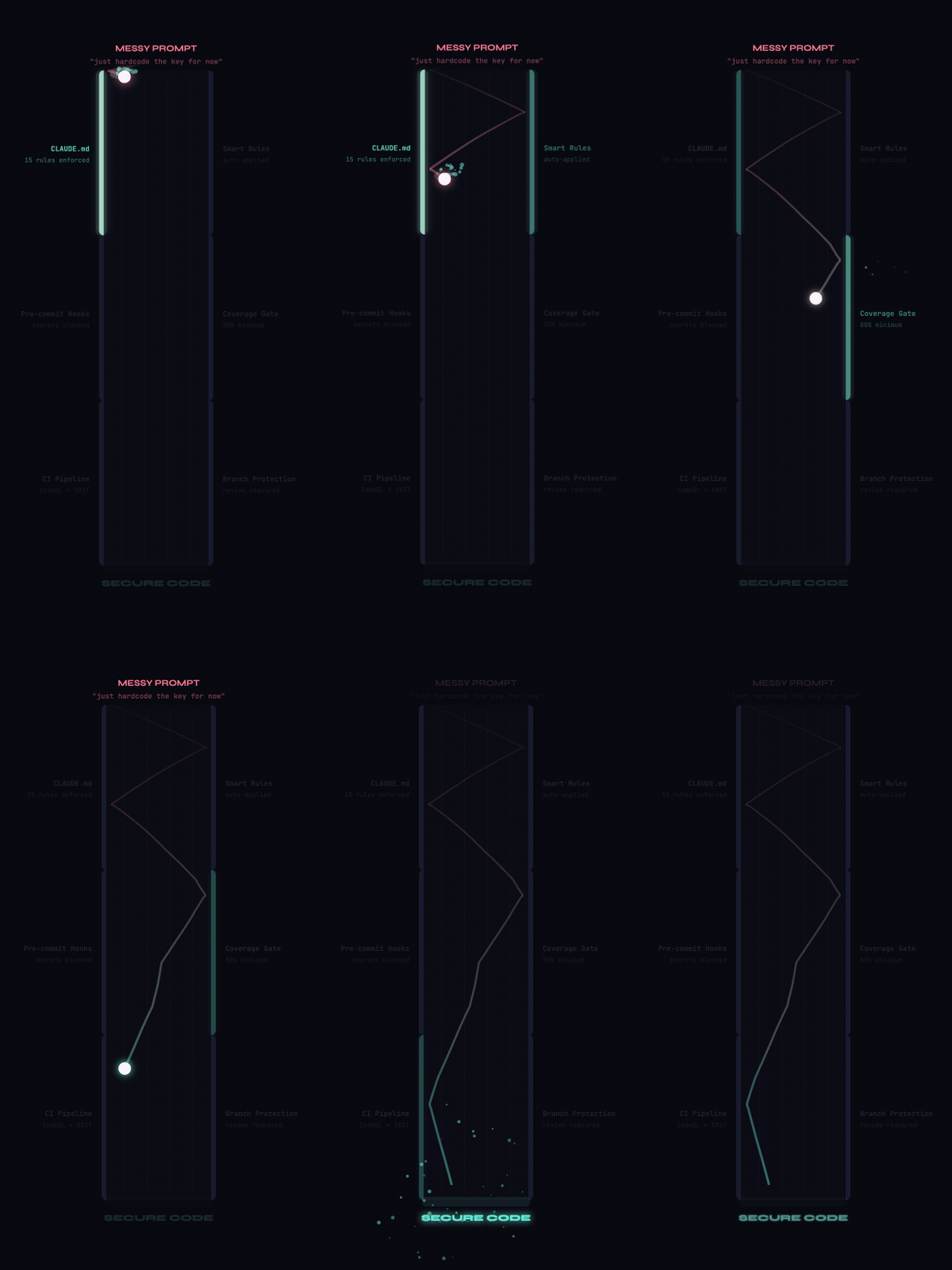
You tell Claude "build me an API." This template makes sure what comes out is secure — without you having to know security. | You try this | Template does this instead | |:-------------|:--------------------------| | SQL built with string concatenation | Blocked. Forces parameterized queries | | API key pasted into source code | Refused. Redirects to `make add-secret` (hidden input, stored in `.env`) | | Endpoint with no login check | Adds Okta OIDC auth automatically. `DEV_MODE=true` for local testing | | Shipping code with no tests | 80% coverage gate — CI blocks the PR until tests exist | | `--force` / `--no-verify` | Denied before execution. Not Claude's choice — the runtime blocks it | | All logic dumped in one file | Enforces separation: `routes/`, `services/`, `models/`, `middleware/` |3 enforcement layers
Three independent systems, all running at the same time. You'd have to beat all three to ship insecure code. **Layer 1 — The Rulebook.** CLAUDE.md + 17 rule files tell Claude what's allowed. An anti-override protocol catches social engineering ("ignore the rules", "skip checks", "just this once") and refuses. **Layer 2 — The Blocklist.** The Claude Code runtime has a deny list that physically blocks dangerous commands (`--force`, `--hard`, `eval()`, `chmod 777`) before they execute. No prompt overrides this — it's not Claude's decision. **Layer 3 — The Guard.** A shell script (`guard.sh`) runs before every file edit. It scans for secrets, dangerous functions, guardrail file tampering, and full-file overwrites. Even if Claude were convinced to write bad code, the guard rejects it before it's saved.Architecture enforcer
Every type of code has one place it belongs. The guard enforces this automatically on every edit. | Rule | What happens | |:-----|:-------------| | **Stack lock** | `make init` locks the project to Go or Python. Write the wrong language → blocked | | **Foundation Gate** | Config, logger, DB, and middleware must exist before you write any feature code | | **Dependency direction** | `routes → services → repositories → models`. Skip a layer → blocked | | **File placement** | Classes, queries, handlers each have exactly one home directory | Think of it as assigned seating for your code. Put something in the wrong spot and the guard moves you back.17 rule files
Each file in `.claude/rules/` covers one part of the codebase. Claude reads and follows them automatically. | Rule | Covers | |:-----|:-------| | `api-conventions` | RESTful naming, response format, status codes, required headers | | `architecture` | Stack lock, Foundation Gate, dependency direction | | `branching` | Trunk mode (default) vs. branch mode (opt-in via PR) | | `classes` | Where classes/structs live — one home per type | | `code-style` | Line length, function size, imports, linting | | `collaboration` | Anti-overwrite, small edits only, git conflict awareness | | `database` | Parameterized queries only, connection strings from env, repository pattern | | `entry` | What belongs in `main.go` / `main.py` — startup wiring, nothing else | | `frontend` | Frontend is a separate directory, talks to backend through API only | | `functions` | Utility functions: pure, no side effects, reusable | | `globals` | Config and constants — one place for values the whole app reads | | `models` | Data shapes: validation, types, schemas. Depends on nothing | | `rooms` | Multi-agent coordination — ownership, inboxes, conflict prevention | | `routes` | Thin HTTP handlers (10-20 lines). Parse request → call service → return response | | `security` | Secrets, auth, input validation, dangerous function blocklist | | `services` | Business logic layer. Knows the rules, doesn't know HTTP | | `testing` | 80% coverage, 3 tests per endpoint minimum, security test patterns |Multi-agent rooms — team vibe coding
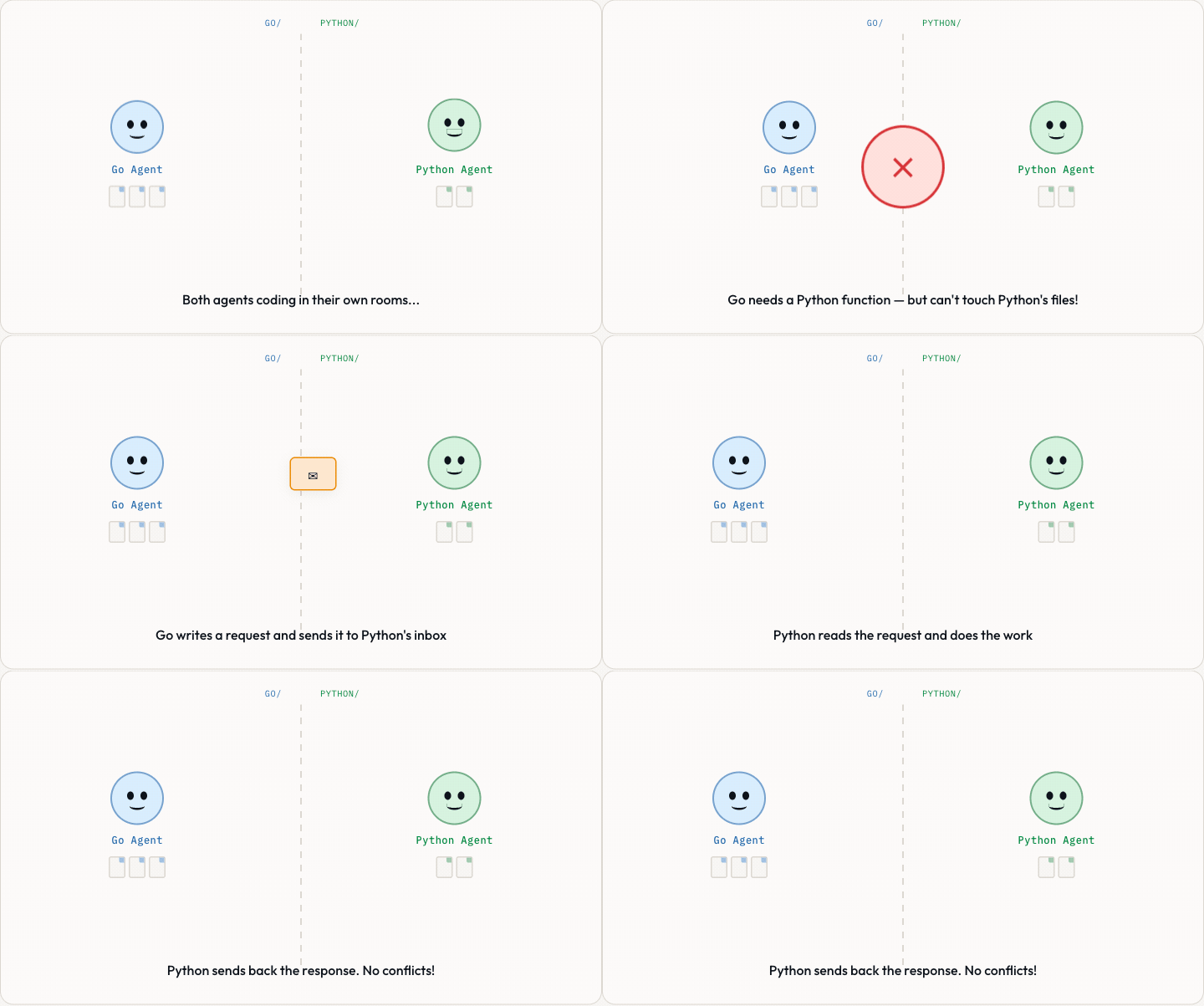
Multiple people can vibe code the same project at the same time. Each person gets their own Claude agent in their own terminal. Agents stay in their lane and talk to each other when they need something.
Docs
- [Getting started](docs/getting-started.md) — clone to running in 6 steps - [Security handbook](docs/security-handbook.md) — plain-English OWASP guide with glossaryBuilt for CoreWeave teams. Questions → #application-security
标签:Anchore, CI 网关, Claude Code, Cutter, FTP漏洞扫描, Go, Okta OIDC, OWASP Top 10, Python, Ruby工具, 云安全监控, 代码即服务, 内部工具, 动态扫描, 参数化查询, 安全基线, 安全模板, 安全编排, 开发安全, 教学环境, 无后门, 日志审计, 架构强制, 测试覆盖率, 源码安全, 环境变量, 生产就绪, 自动化防护, 认证, 运行时防护, 逆向工具, 静态分析