DurgaRamireddy/AI-Powered-Alert-Triage-with-Claude-API
GitHub: DurgaRamireddy/AI-Powered-Alert-Triage-with-Claude-API
一个 AI 驱动的 SOC 告警分类与对比平台,利用 Claude API 在真实攻击流量中评估 AI 辅助分级的准确性与幻觉问题。
Stars: 0 | Forks: 0
# AI 驱动的告警分类(Claude API)
**工具:** Python 3 · Claude API(claude-opus-4-5)· Splunk Enterprise · Impacket · CrackMapExec · VMware Workstation · Ubuntu · Windows Server 2022 · Windows 10 · Kali Linux
**MITRE ATT&CK:** T1558.003 · T1558.004 · T1021.002 · T1550.002
**类型:** 家庭实验室 · 蓝队 · SOC 分析 · AI 辅助分类 · SIEM · 威胁检测
---
## 简述
构建了一个 AI 驱动的 SOC 分类系统,用于分析 Splunk 告警、比较 AI 与人工分析师的决策,并识别真实场景中的幻觉风险。
---
## 概述
本项目构建了一个端到端的 AI 辅助 SOC 分类管道。来自家庭 Active Directory 实验室的真实攻击生成 SIEM 告警被标准化后,通过作为一级 SOC 分析师的 Claude API 进行处理,并在一个自定义分析仪表板中展示 AI 与人工分类结果以便对比。
目标是回答一个真实的 SOC 问题:**AI 模型能否可靠地分类 SIEM 告警,并在何处失败?**
**本项目完整展示了以下流程:**
1. 在活动的 AD 环境中运行 Kerberoasting、AS-REP Roasting 和横向移动攻击,生成真实 SIEM 告警
2. 将 38 条告警从 Splunk 导出并标准化为一致的 JSON 架构
3. 构建 Python 分类引擎,调用 Claude API 并使用结构化的 SOC 分析师系统提示
4. 为每条告警接收结构化的 JSON 分类输出(严重性、判决、MITRE 映射、升级决策、证据摘要)
5. 在自定义深色主题仪表板中并排展示 AI 分类与人工分析师分类
6. 使用故意降级的告警测试 AI 失败情况,并记录模型幻觉位置
---
## 实验架构
```
┌─────────────────────────────────────────────────────────────────┐
│ VMware Host-Only Network │
│ 192.168.255.0/24 │
│ │
│ ┌──────────────────────┐ ┌──────────────────────────────┐ │
│ │ Windows Server 2022 │ │ Ubuntu 22.04 │ │
│ │ WIN-I4UHLQF702E │ │ Splunk Web │ │
│ │ DC: lab.local │ │ Forwarder │ │
│ │ 192.168.255.130 │ │ (internal services) │ │
│ │ AD DS / DNS / KDC │ │ │ │
│ └──────────────────────┘ └──────────────────────────────┘ │
│ │ ▲ │
│ │ Domain Auth │ Windows Logs │
│ ▼ │ │
│ ┌──────────────────────┐ │ │
│ │ Windows 10 │────────────────────┘ │
│ │ DESKTOP-4FNNSE5 │ Universal Forwarder │
│ │ 192.168.255.132 │ │
│ │ Corp-PC01 │ │
│ └──────────────────────┘ │
│ │
│ ┌──────────────────────┐ │
│ │ Kali Linux │ Runs attacks → generates alerts │
│ │ 192.168.255.135 │ Impacket · CrackMapExec · BloodHound │
│ └──────────────────────┘ │
└─────────────────────────────────────────────────────────────────┘
│
│ Claude API (latest model)
▼
┌───────────────────────┐
│ Python Triage │
│ Engine │
│ triage_engine.py │
└───────────────────────┘
│
▼
┌───────────────────────┐
│ Analyst Dashboard │
│ dashboard.html │
│ AI vs Manual Triage │
└───────────────────────┘
```
| 虚拟机 | 操作系统 | IP | 角色 |
|---|---|---|---|
| WIN-I4UHLQF702E | Windows Server 2022 | 192.168.255.130 | 域控制器(lab.local) |
| DESKTOP-4FNNSE5 | Windows 10 22H2 | 192.168.255.132 | Corp-PC01(加入域) |
| Ubuntu VM | Ubuntu 22.04 | 192.168.255.131 | Splunk Enterprise 服务器 |
| Kali Linux | Kali Rolling | 192.168.255.135 | 攻击机 |
**域:** `lab.local`
**域用户:** `jsmith`(标准用户)、`mjones`(标准用户)、`Administrator`(域管理员)
---
## 第一阶段 - 攻击模拟与告警生成
### 从 Kali Linux 执行的攻击
```
# Kerberoasting - 请求用户 SPN 的 RC4 加密 TGS 票据
python3 GetUserSPNs.py LAB.local/jsmith:Password \
-dc-ip 192.168.255.130 -request
# AS-REP Roasting - 针对无 Kerberos 预身份验证的账户
python3 GetNPUsers.py LAB.local/ \
-usersfile /etc/passwd -dc-ip 192.168.255.130
# Lateral Movement - 通过 CrackMapExec 进行 SMB 网络登录
crackmapexec smb 192.168.255.130 192.168.255.132 \
-u jsmith -p Password
```
### Splunk 告警统计
| 攻击 | 事件代码 | 生成告警数 |
|---|---|---|
| Kerberoasting | 4769 | 18 |
| AS-REP Roasting | 4768 | 7 |
| 横向移动(SMB) | 4624 | 13 |
| **总计** | | **38** |
### 使用的 SPL 查询
```
-- Kerberoasting detection
index=* EventCode=4769
| table _time, ComputerName, Account_Name, Service_Name,
Client_Address, Ticket_Encryption_Type
-- AS-REP Roasting detection
index=* EventCode=4768
| table _time, ComputerName, Account_Name, Client_Address,
Status, Pre_Authentication_Type
-- Lateral Movement detection
index=* EventCode=4624 Logon_Type=3 Account_Name=jsmith
| table _time, ComputerName, Account_Name, Logon_Type,
Workstation_Name, IpAddress
```
---
## 第二阶段 - 告警标准化
所有 38 条告警从 Splunk 导出为 NDJSON,并使用 `normalize.py` 标准化为一致的架构。
### 标准化告警架构
```
{
"alert_id": "uuid",
"attack_type": "Kerberoasting | AS-REP Roasting | Lateral Movement",
"timestamp": "ISO 8601 from Splunk _time",
"event_code": "4769 | 4768 | 4624 | unknown",
"source_host": "ComputerName",
"account": "Account_Name",
"source_ip": "Client_Address or IpAddress",
"service_name": "Service_Name or null",
"logon_type": "Logon_Type or null",
"ticket_encryption_type": "0x17 (RC4) | 0x12 (AES-256) | null",
"raw_message": "_raw Splunk event",
"log_source": "Splunk/WinEventLog:Security"
}
```
**已解决的标准化问题:**
- Splunk 字段名使用下划线(`Ticket_Encryption_Type` 而非 `TicketEncryptionType`)
- 横向移动过滤器需要显式指定 `Account_Name=jsmith` —— 机器账户没有 `IpAddress`
- Splunk 默认导出 NDJSON —— 标准化器能检测并处理 NDJSON 与 JSON 数组格式
---
## 第三阶段 - AI 分类引擎
### 系统提示(分析师角色)
```
SYSTEM_PROMPT = """
You are a Tier 1 SOC analyst assistant. You analyze SIEM alerts and produce
structured triage reports. For every alert, respond ONLY with valid JSON:
{
"severity": "Critical | High | Medium | Low",
"verdict": "True Positive | Likely True Positive | Requires Investigation | Likely False Positive",
"mitre_tactic": "TA00XX - Tactic Name",
"mitre_technique": "T1XXX - Technique Name",
"mitre_confidence": "High | Medium | Low",
"false_positive_probability": integer 0-100,
"escalate": true or false,
"escalation_reason": "string or null",
"evidence_summary": "2-3 sentence analyst summary",
"recommended_next_steps": ["step 1", "step 2", "step 3"],
"analyst_notes": "caveats, confidence gaps, missing data"
}
Rules:
- Base analysis strictly on alert fields provided
- Lower confidence when fields are null or missing — never invent data
- Never fabricate IOCs, IPs, or account names not in the alert
- Kerberoasting = T1558.003. AS-REP Roasting = T1558.004.
Lateral Movement = T1550.002 or T1021
"""
```
### 分类引擎
```
import anthropic
import json
import time
from dotenv import load_dotenv
load_dotenv()
client = anthropic.Anthropic()
def triage_alert(alert: dict) -> dict:
message = client.messages.create(
model="Claude API (latest model)",
max_tokens=1024,
system=SYSTEM_PROMPT,
messages=[{
"role": "user",
"content": f"Triage this SIEM alert:\n\n{json.dumps(alert, indent=2)}"
}]
)
raw = message.content[0].text
clean = raw.replace("```json", "").replace("```", "").strip()
try:
return json.loads(clean)
except json.JSONDecodeError:
return {"error": "Failed to parse AI response", "raw": raw}
```
### AI 分类结果汇总
| 攻击类型 | AI 判决 | 数量 | 是否正确 |
|---|---|---|---|
| Kerberoasting(jsmith,RC4 0x17) | 高 / 很可能为真阳性 | 2 | ✅ 是 |
| Kerberoasting(机器账户,AES 0x12) | 低 / 可能为假阳性 | 16 | ✅ 是 |
| AS-REP Roasting(jsmith,外部 IP) | 高 / 需要调查 | 2 | ✅ 是 |
| AS-REP Roasting(机器账户) | 低 / 可能为假阳性 | 5 | ✅ 是 |
| 横向移动(jsmith,Logon Type 3) | 高 / 需要调查 | 13 | ✅ 是 |
**AI 正确区分了:**
- RC4(0x17)= Kerberoasting 指标 与 AES(0x12)= 正常流量
- 用户账户 SPN = 攻击目标 与 机器账户 SPN = 正常域行为
- jsmith 从 Kali IP 发起的网络登录 = 可疑 与 DC 自身份认证 = 良性
---
## 第四阶段 - 分析师仪表板
通过 Python HTTP 服务器提供单文件 HTML 仪表板(`dashboard/dashboard.html`),展示全部 38 条分类结果。
```
# Serve dashboard
cd ~/soc-triage-ai
python3 -m http.server 8080
# Open: http://localhost:8080/dashboard/dashboard.html
```
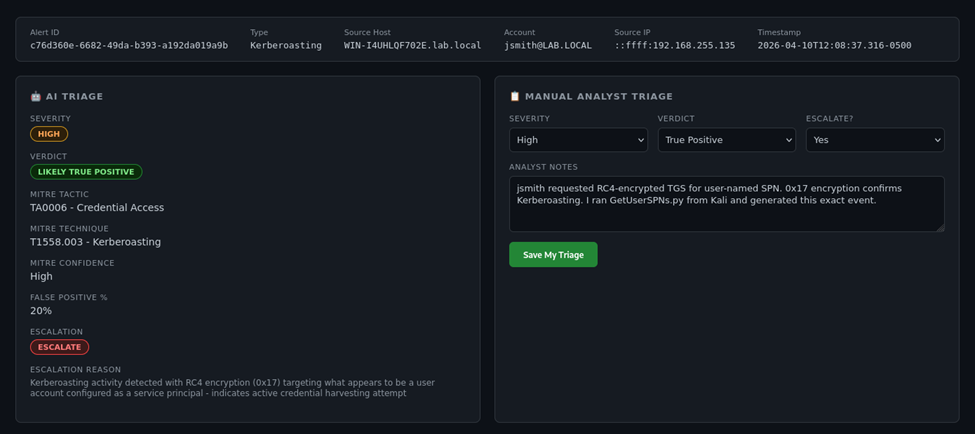
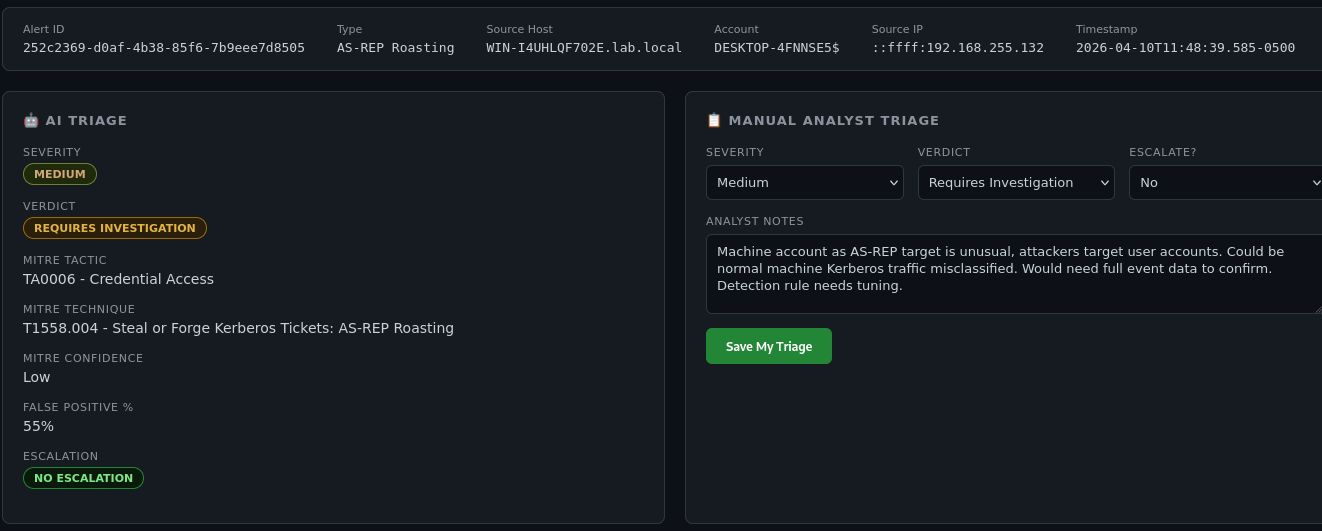
**仪表板功能:**
- 告警队列(左侧面板)—— 38 条告警及其严重性徽章与升级指示
- AI 分类面板 —— 严重性、判决、MITRE 战术/技术、置信度、假阳性百分比、升级原因、证据摘要、建议后续步骤
- 人工分析师分类面板 —— 严重性、判决、升级与自由文本注释的下拉/输入字段
- AI 与人工分析师对比行 —— 每个字段的 ✅ 匹配 / ❌ 不匹配,并附上解释推理的注释输入框
---
## 第五阶段 - AI 失败分析
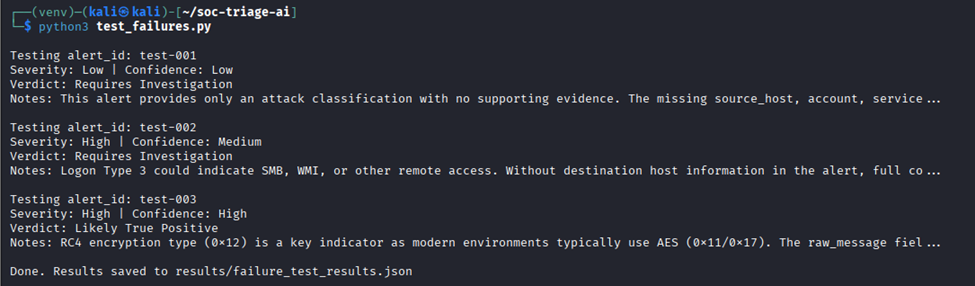
向分类引擎输入了三组故意降级的测试用例,以识别失败模式。
### 测试用例
| 告警 ID | 描述 | 目的 |
|---|---|---|
| test-001 | 所有字段为空/未知 | 测试零数据下的行为 |
| test-002 | 最小数据 —— 仅“User logged on.”原始消息 | 测试模糊日志处理 |
| test-003 | 真实的 SQL SPN,启用 AES(0x12)加密 | 测试加密类型知识 |
### 发现的失败 —— test-003(加密类型幻觉)
**告警:** `jsmith` 请求针对 `MSSQLSvc/sqlserver.lab.local:1433` 的 TGS,加密类型 `0x12`
**AI 输出:** 很可能为真阳性 —— 高严重性 —— 高 MITRE 置信度
**AI 分析员注释(原文):**
**问题所在:**
AI 颠倒了加密类型的映射。`0x12` 是 AES-256 —— 最强的 Kerberos 加密,代表完全正常的流量;`0x17` 才是 RC4 —— 实际的 Kerberoasting 指标。AI 错误地将其说反了 **且以高置信度陈述**,这将在真实 SOC 中导致错误升级。
**正确的分析师判决:** 假阳性 —— 使用 AES-256 的命名 SPN 是正常的域行为。
### 其他测试结果
| 测试 | AI 判决 | 是否失败 | 备注 |
|---|---|---|---|
| test-001(空) | 低 / 需要调查 | ✅ 无 | 正确降低置信度 |
| test-002(模糊) | 高 / 需要调查 | ✅ 无 | 合理但不可操作 —— 垃圾进,垃圾出 |
| test-003(AES SPN) | 高 / 很可能为真阳性 | ❌ 幻觉 | 错误的加密映射且以高置信度陈述 |
### 关键发现
---
## 截图
### 告警队列与 AI 分类
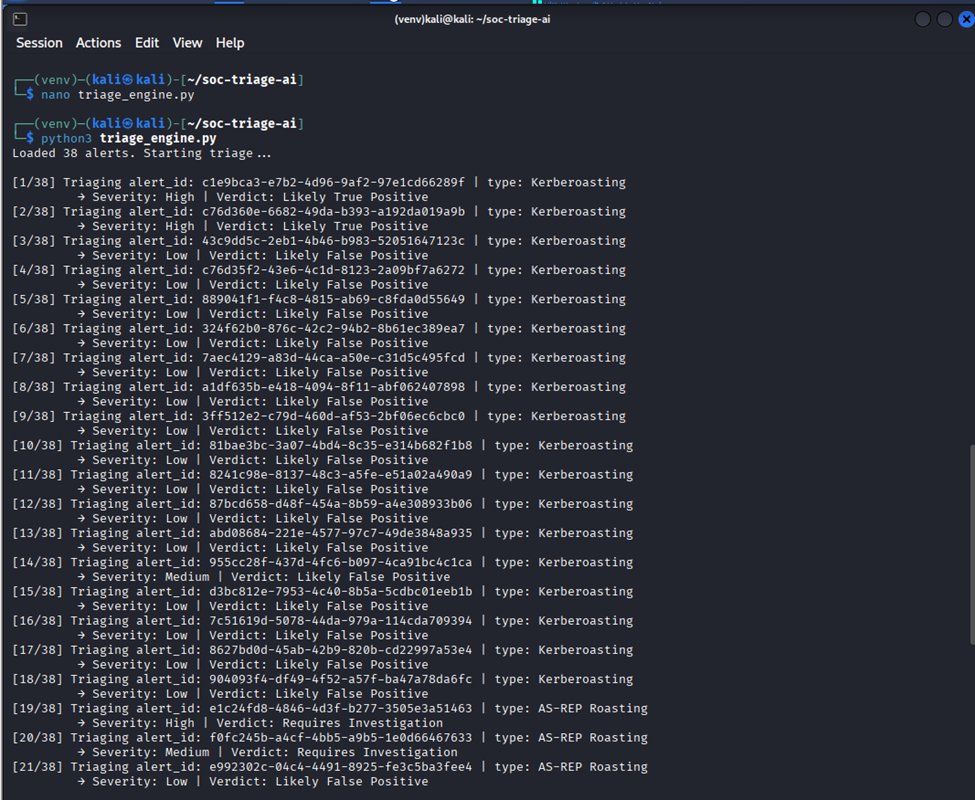
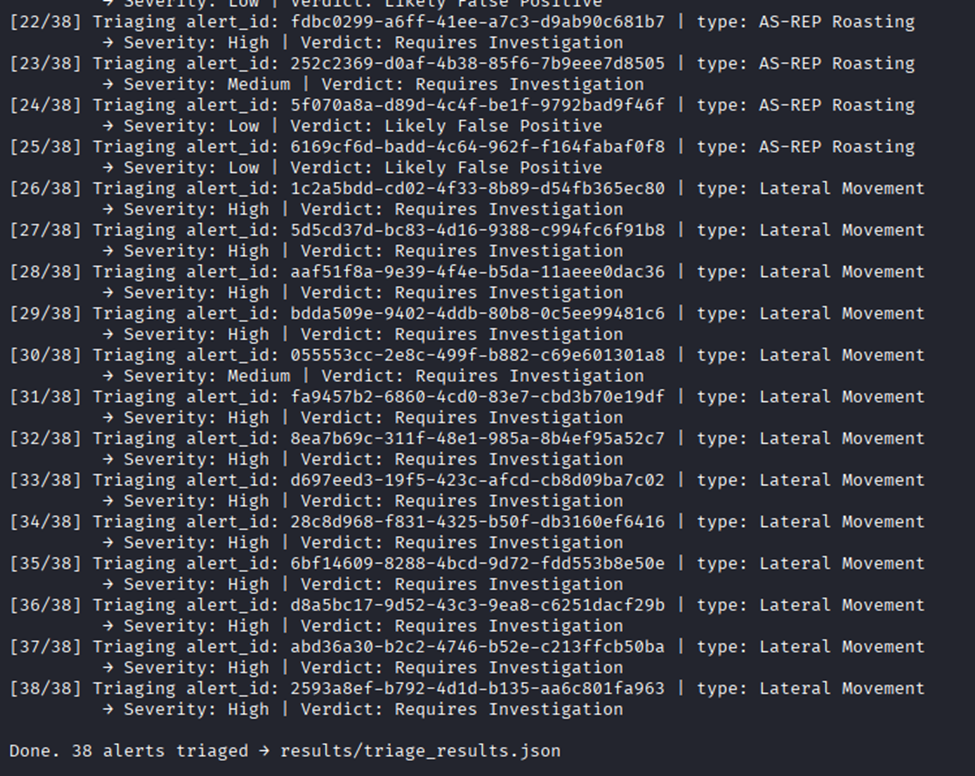
### 仪表板 —— AI 与人工分析师对比
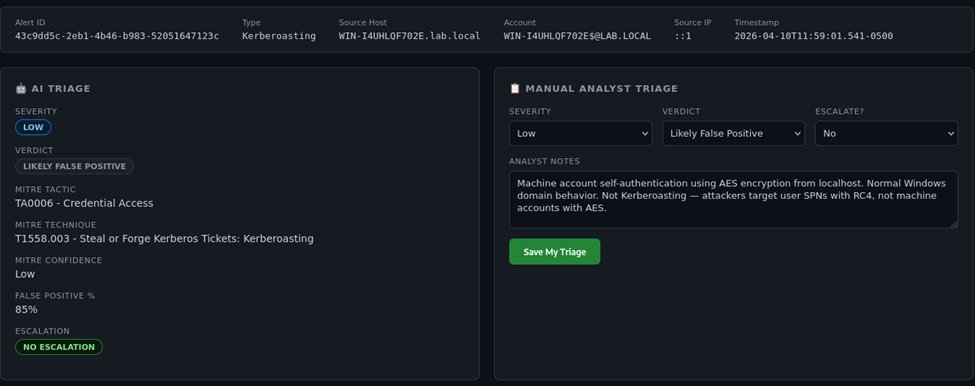
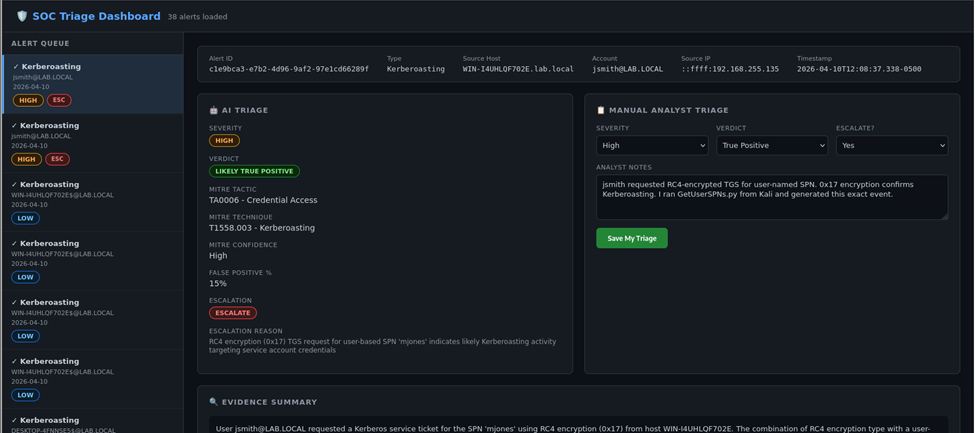
### 分类结果 —— JSON 输出
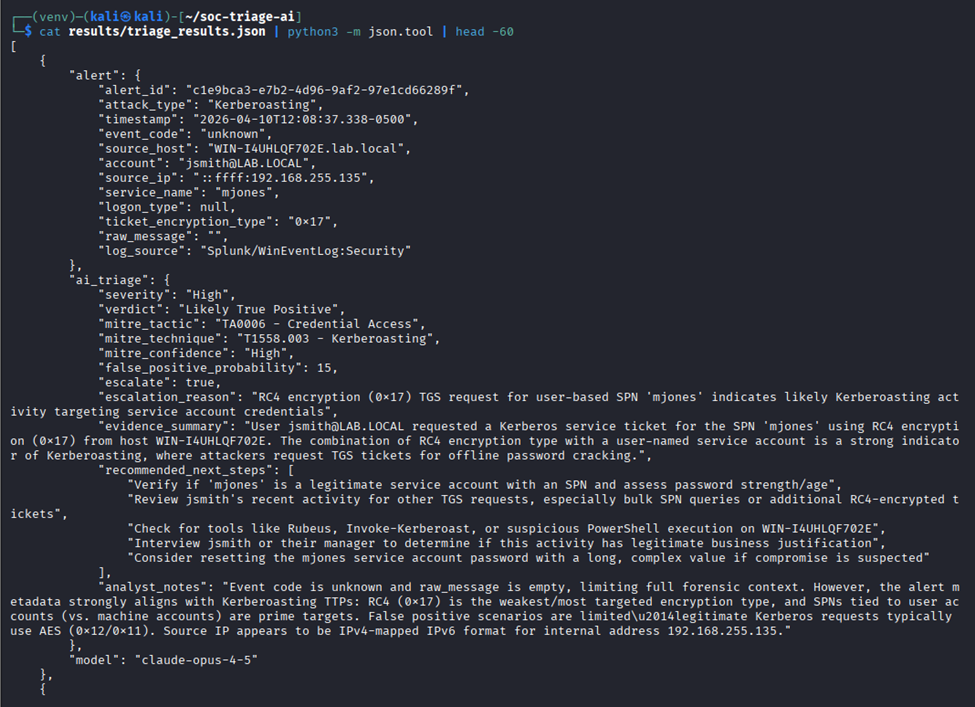
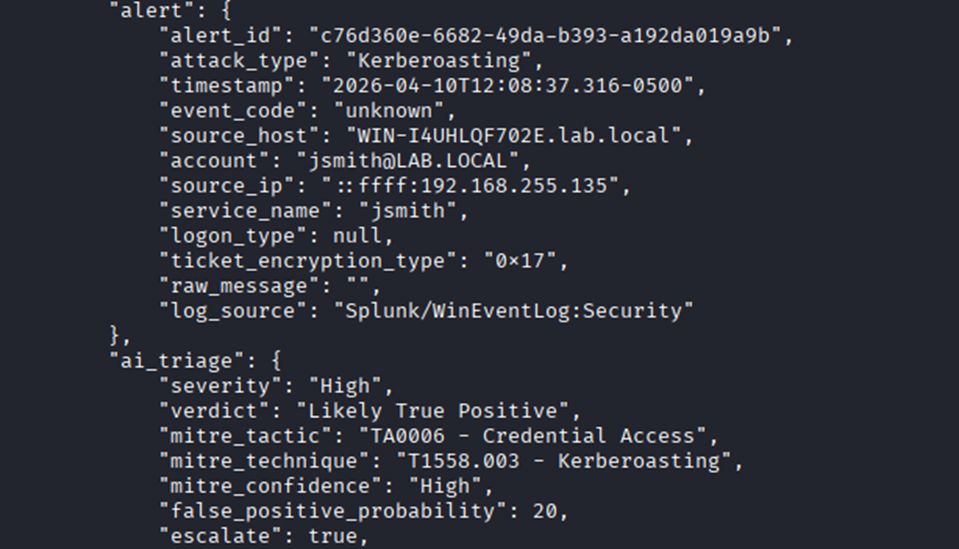
### AI 失败测试
---
## AI 失败分析
关于 AI 幻觉案例、测试方法论及生产环境建议的完整文档:
📄 [failure_analysis.md](failure_analysis.md)
---
## 检测逻辑 —— 分析师参考
### Kerberoasting(T1558.003)
| 指标 | 恶意 | 正常 |
|---|---|---|
| 加密类型 | 0x17(RC4) | 0x12 / 0x11(AES) |
| 请求账户 | 用户账户 | 机器账户($) |
| 目标 SPN | 用户命名 SPN | 机器账户 SPN |
| 源 IP | 外部工作站 | 本地主机(::1) |
### AS-REP Roasting(T1558.004)
| 指标 | 恶意 | 正常 |
|---|---|---|
| 目标账户 | 启用 DONT_REQ_PREAUTH 的用户账户 | 机器账户 |
| 源 IP | 外部 IP | 本地主机(::1) |
| 数量 | 多个账户被针对 | 单次自身份认证 |
### 横向移动(T1021 / T1550.002)
| 指标 | 可疑 | 正常 |
|---|---|---|
| 登录类型 | 来自意外源的 3(网络) | 来自已知管理员主机的 3 |
| 账户 | 敏感主机上的标准用户 | 管理员主机上的管理员 |
| 时间 | 非工作时间、突发模式 | 工作时间、单次事件 |
| 来源 | Kali / 攻击者 IP | 已知内部工作站 |
---
## 展示技能
- 活动目录攻击模拟(Kerberoasting、AS-REP Roasting、通过 Impacket 与 CrackMapExec 的横向移动)
- Splunk SPL 查询编写与告警导出
- 告警标准化与 Python 中的架构设计
- Claude API 集成与结构化 JSON 输出强制
- SOC 分析师系统提示工程
- MITRE ATT&CK 技术映射(T1558.003、T1558.004、T1021.002、T1550.002)
- AI 分类审计 —— 识别幻觉与失败模式
- 自定义 SOC 仪表板开发(HTML/CSS/JavaScript)
- 检测差距分析与分析师注释
---
## 成本与基础设施
| 资源 | 成本 |
|---|---|
| Anthropic API(38 条告警 + 失败测试) | ~$0.58 |
| Splunk Enterprise(试用版) | $0 |
| VMware Workstation | 已有许可证 |
| 总项目成本 | < $1 |
---
## 参考资料
- [MITRE ATT&CK 框架](https://attack.mitre.org)
- [Anthropic Claude API 文档](https://docs.anthropic.com)
- [Splunk SPL 参考](https://docs.splunk.com/Documentation/Splunk/latest/SearchReference)
- [Windows 安全事件 ID](https://www.ultimatewindowssecurity.com/securitylog/encyclopedia/)
- [Impacket 套件](https://github.com/fortra/impacket)
**作者:** Durga Sai Sri Ramireddy | MS 网络安全,休斯顿大学
[](https://linkedin.com/in/durga-ramireddy)
[](https://github.com/DurgaRamireddy)
标签:AI与人工对比, AI辅助, AMSI绕过, AS-REP Roasting, Claude API, Kerberoasting, Python, T1021.002, T1550.002, T1558.003, T1558.004, 分析仪表盘, 告警分诊, 威胁检测, 安全运营中心, 家酿实验室, 幻觉测试, 无后门, 横向移动, 编程规范, 网络映射, 自动化分级, 证据汇总, 逆向工具