cont1n3nt/ai-phishing-detector
GitHub: cont1n3nt/ai-phishing-detector
基于TF-IDF与集成学习算法的钓鱼邮件文本检测系统,提供完整的训练、评估与FastAPI推理服务。
Stars: 3 | Forks: 0
# AI 网络钓鱼检测器
[](https://github.com/cont1n3nt/ai-phishing-detector/actions/workflows/ci.yml)
[](https://www.python.org/)
[](https://opensource.org/licenses/MIT)
[](https://github.com/astral-sh/ruff)
[](https://docs.pytest.org/)
## 项目概述
本项目是一个用于从文本中检测网络钓鱼信息的机器学习系统。
它实现了包含预处理、模型训练、评估、推理和 FastAPI 的完整 pipeline。
该解决方案使用了 TF-IDF 向量化以及结合了以下算法的集成模型:
* Logistic Regression
* Random Forest
* XGBoost
## CI/CD
每次向 `main`/`master` 分支的推送和拉取请求都会触发自动化 pipeline:
```
checkout → setup Python 3.11 → install deps → run unit tests (pytest)
```
## 安装说明
### 前置条件
* Python 3.11+
* pip
### 设置
```
# 1. Clone the repository
git clone https://github.com/cont1n3nt/ai-phishing-detector.git
cd ai-phishing-detector
# 2. Create and activate a virtual environment
python -m venv .venv
# Windows
.venv\Scripts\activate
# Linux / macOS
# source .venv/bin/activate
# 3. Install dependencies
pip install -r requirements.txt
```
### 使用预训练模型运行
从 HuggingFace Hub 下载模型,然后启动 API 服务器:
```
python scripts/download_model.py
python app.py
```
### 从头开始训练
要求数据集位于 `data/preprocess/cleaned_dataset.csv`:
```
python -m src.train
```
### 使用 Docker 运行
```
docker build -t ai-phishing-detector .
docker run -p 8000:8000 ai-phishing-detector
```
### 运行测试
```
pytest
# 或特定子集
pytest tests/test_features.py tests/test_api.py -v
```
## 配置
在项目根目录创建一个 `.env` 文件以覆盖默认配置:
```
THRESHOLD=0.4
MAX_FEATURES=5000
HF_MODEL_REPO=cont1n3nt/ai-phishing-model
HF_DATASET_REPO=cont1n3nt/ai-phishing-dataset
```
## 动机
网络钓鱼攻击仍然是最常见的网络安全威胁之一。
自动化的检测系统可以通过在用户与恶意信息交互之前识别它们,从而显著降低风险。
## 数据集
* 来源:从 Kaggle 收集的多个与网络钓鱼相关的数据集,并合并为一个单一的数据集
* 总样本数:约 114,000
* 类别平衡:约 50% 网络钓鱼 / 约 50% 合法
* [HuggingFace 数据集](https://huggingface.co/datasets/cont1n3nt/ai-phishing-dataset)
### 预处理步骤
* 转换为小写
* 移除 URL
* 移除非字母字符
* 空白字符规范化
* TF-IDF 向量化(uni-grams + bi-grams,最多 5000 个特征)
注意:
为了保持仓库轻量化,本仓库中不包含原始数据集。
## 特征与预处理
在 `src/features.py` 中实现:
* `clean_text(text: str) -> str`
* `preprocess_texts(texts: List[str]) -> List[str]`
* 用于推理的输入验证
* 用于可解释性的特征贡献提取
TF-IDF 向量化在统一的 Pipeline 中应用。
## 模型
最终模型是使用软投票 的集成模型:
* Logistic Regression(可解释的基线模型)
* Random Forest(非线性模式)
* XGBoost(梯度提升)
该集成模型提高了鲁棒性和泛化能力,同时通过 Logistic Regression 保留了可解释性。
[HuggingFace 模型](https://huggingface.co/cont1n3nt/ai-phishing-model)
## 模型管理
训练好的 pipeline 通过 HuggingFace Hub 进行版本控制和分发。
制品 包括:
- TF-IDF 词汇表
- 预处理 pipeline
- 集成权重
- 元数据/配置
使用 `python scripts/download_model.py` 来获取最新版本。
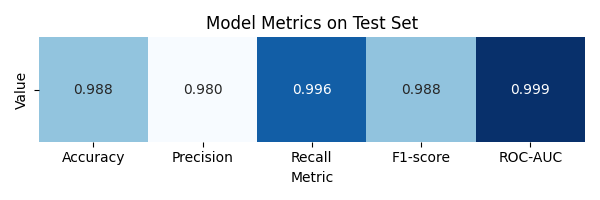
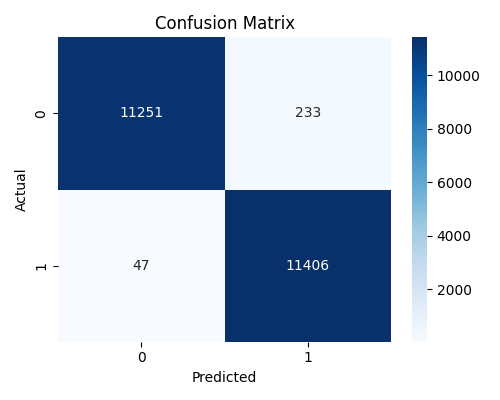
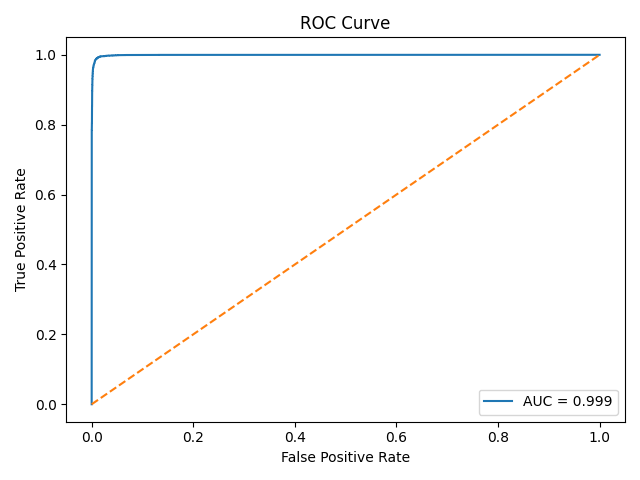
## 实验与指标
可视化图表:
## 项目架构
Mermaid 图(兼容 GitHub):
```
graph TD
A[Raw Data from Kaggle] --> B[Preprocessing]
B --> C[TF-IDF Vectorization]
C --> D[Model Training]
D --> E[VotingClassifier: LR + RF + XGB]
E --> F[Evaluation & Metrics]
F --> G[Saved Pipeline]
G --> H[Inference: predict.py]
H --> I[FastAPI: app.py]
I --> J[Prediction Output]
```
## API 用法
### 运行 FastAPI
```
python app.py
```
### 发送预测请求
```
curl -X POST http://127.0.0.1:8000/predict \
-H "Content-Type: application/json" \
-d '{"text": "Your account is blocked. Verify immediately."}'
```
示例响应:
```
{
"prediction": 1,
"label": "PHISHING",
"probability": 0.987,
"top_words": [["verify", 0.84], ["account", 0.63]]
}
```
## 目录结构
```
ai-phishing-detector/
├── app.py FastAPI application
├── config.py Configuration
├── requirements.txt Dependencies
├── Dockerfile Docker image
├── data/ datasets (not included)
├── images/ ROC curve and confusion matrix
├── model/ saved pipeline (auto-downloaded)
├── scripts/
│ └── download_model.py
├── src/
│ ├── features.py preprocessing and explainability
│ ├── train.py training and evaluation
│ └── predict.py inference logic
└── tests/ unit tests
```
## 参考文献
* [scikit-learn](https://scikit-learn.org/)
* [XGBoost](https://xgboost.readthedocs.io/)
* [FastAPI](https://fastapi.tiangolo.com/)
标签:AI钓鱼检测, AMSI绕过, Apex, API服务, AV绕过, Docker, FastAPI, HuggingFace, NLP, Python, TF-IDF, VotingClassifier, XGBoost, 威胁检测, 安全规则引擎, 安全防御评估, 文本分类, 无后门, 机器学习, 网络安全, 请求拦截, 逆向工具, 逻辑回归, 邮件安全, 钓鱼邮件识别, 随机森林, 隐私保护, 集成学习